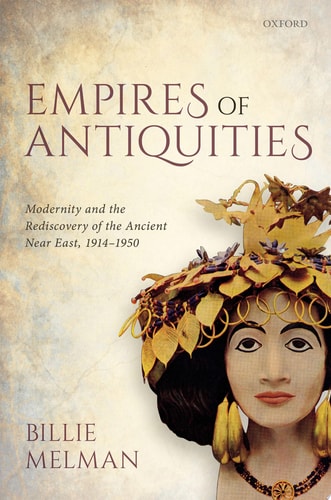
Empires of Antiquities: Modernity and the Rediscovery of the Ancient Near East, 1914-1950
0
0
As an Amazon Associate and affiliate partner, Menrva Books earns from qualifying purchases. Learn more
Author Description
Empires of Antiquities is a history of the rediscovery of civilizations of the ancient Near East in the imperial order that evolved between the outbreak of the First World War and the 1950s. It explores the ways in which Near Eastern antiquity was redefined and experienced, becoming the subject of new regulation, new modes of knowledge, and international and local politics. A series of globally publicized spectacular archaeological discoveries in Iraq, Egypt, and Palestine, which the book follows, made antiquity visible, palpable and accessible as never before. The new uses of antiquity and its relations to modernity were inseparable from the emergence of the post-war world order, imperial collaboration and collisions, and national aspirations. Empires of Antiquities uniquely combines a history of the internationalization of a new "regime of archaeology" under the oversight of the League of Nations and its web of institutions, a history of British passions for Near Eastern antiquity, on-the-ground colonial mechanisms and nationalist claims on the past. It points to the centrality of the mandate system, particularly mandates classified A, in Mesopotamia/Iraq, Palestine and Transjordan, formerly governed by the Ottoman Empire, and of Egypt, in a new culture of antiquity. Drawing on an unusually wide range of archives in several countries, as well as on visual and material evidence, the book weaves together imperial, international, and local histories of institutions, people, ideas and objects and offers an entirely new interpretation of the history of archaeological discovery and its connections to empires and modernity.
Menrva's Summary
THE THESIS
How did the rediscovery of ancient Near Eastern civilizations between 1914 and 1950 shape the geopolitical landscape and cultural identity of the post-war imperial order? Billie Melman, a scholar of modern history, investigates the intersection of archaeological practice, colonial administration, and nationalist movements. By analyzing the transition from Ottoman governance to the League of Nations mandate system, the author argues that the management of antiquity was a central component of imperial power and international diplomacy during the early twentieth century.
THE SCOPE MAP
What You Will Find
- Analysis of the League of Nations mandate system in Iraq, Palestine, and Transjordan.
- Examination of the 'regime of archaeology' and its institutional oversight mechanisms.
- Integration of visual and material evidence alongside extensive archival research from multiple nations.
- Exploration of the tension between British imperial interests and local nationalist claims on historical heritage.
THE AUTHORITY PERSPECTIVE
Historians and scholars of Middle Eastern studies recognize this work as a significant contribution to the understanding of how colonial powers utilized historical narratives to legitimize political control. Readers frequently note the academic density of the prose and the breadth of the primary source material utilized to construct this historical argument.
Page Count:
416
Publication Date:
2020-07-05
Publisher:
Oxford University Press
ISBN-10:
0198824556
ISBN-13:
9780198824558
History
Asia history
Imperialism
Archaeology
Cultural History
Community Tags
Similar Books