Saturn's Jews
0
0
As an Amazon Associate and affiliate partner, Menrva Books earns from qualifying purchases. Learn more
Author Description
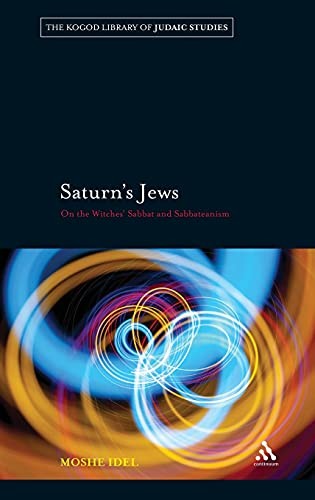
This book explores the phenomenon of Saturnism, namely the belief that the planet Saturn, the seventh known planet in ancient astrology, was appointed upon the Jews, who celebrated the Sabbath, the seventh day of the Jewish week. Moshe Idel details how the anonymous, late 14th century Sefer Ha-Peliyah was to have disturbing consequences in the Jewish world three centuries later, interweaving luminaries with the cultural, historical, religious, and philosophical concepts of their day, and demonstrating how cultural agents were inadvertently instrumental in the mid-17th-century mass-movement Sabbateanism that led to the conviction that Sabbatai Tzevi was the Messiah. Exploring how the tragic misperception of the Jewish Sabbath by the non-Jewish world led to a linkage of Jews with sorcery in 14th and 15th-century Europe, associating their holy day with the witches' 'Sabbat' gathering, Idel brings this wide-ranging study into the present day with an analysis of 20th-century scholarship and thought influenced by Saturnism, particularly lingering themes related to melancholy in the works of Gershom Scholem and Walter Benjamin.--Bloomsbury Publishing.
Menrva's Summary
THE THESIS
This book investigates the historical and cultural phenomenon of Saturnism, specifically its connection to Jewish beliefs and practices. Moshe Idel, a renowned scholar of Jewish mysticism, examines the late 14th-century text Sefer Ha-Peliyah and its profound, albeit disturbing, impact on the Jewish world three centuries later. The study traces how the misinterpretation of the Jewish Sabbath by the non-Jewish world led to associations of Jews with sorcery and the witches' 'Sabbat' in medieval Europe. Idel further analyzes how this complex interplay of cultural, historical, religious, and philosophical concepts inadvertently fueled the mid-17th-century Sabbatean movement, which proclaimed Sabbatai Tzevi as the Messiah, and concludes by exploring the influence of Saturnism on 20th-century scholarship, particularly the themes of melancholy in the works of Gershom Scholem and Walter Benjamin.
THE SCOPE MAP
- Exploration of Saturnism: the belief linking the planet Saturn to Jewish people and their Sabbath observance.
- Analysis of the Sefer Ha-Peliyah and its delayed, significant consequences in Jewish history.
- Detailed examination of the cultural, historical, religious, and philosophical concepts interwoven with Saturnism.
- Demonstration of how cultural agents contributed to the 17th-century Sabbatean mass-movement.
- Investigation into the misperception of the Jewish Sabbath and its association with sorcery in 14th and 15th-century Europe.
- Analysis of 20th-century scholarship influenced by Saturnism, including Gershom Scholem and Walter Benjamin.
- Discussion of lingering themes of melancholy in relation to Saturnism and its interpreters.
THE AUTHORITY PERSPECTIVE
Moshe Idel's work is recognized for its deep dive into the complex and often esoteric connections between astrology, Jewish history, and messianic movements. Scholars have noted the book's meticulous research and its ability to illuminate obscure historical threads that have had significant cultural repercussions. The study is appreciated for tracing the evolution of ideas from medieval texts to modern critical thought, particularly concerning the reception and misinterpretation of Jewish practices by wider European society. Idel's analysis provides a nuanced perspective on how historical misunderstandings can shape religious and cultural movements across centuries.
Page Count:
198
Publication Date:
2011-01-01
ISBN-10:
1441121447
ISBN-13:
9781441121448
Non-Fiction
History
Jewish Studies
Cultural History
Astrology
Community Tags
Similar Books