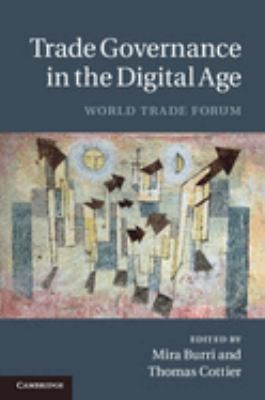
Trade Governance in the Digital Age
0
0
As an Amazon Associate and affiliate partner, Menrva Books earns from qualifying purchases. Learn more
Author Description
The development of new digital technologies has resulted in significant transformations in daily life, from the arrival of online shopping to more fundamental changes in the ways we work and communicate. Many of these changes raise questions that transcend market access and liberalisation, and demand cooperation and coherent regulatory design. International trade regulation has hitherto not reacted in a forward-looking manner to the digital revolution and, particularly at the multilateral level, legal engineering has yielded few tangible results. This book examines whether WTO laws possess the necessary flexibility and resilience to accommodate the changes brought about by burgeoning digital trade. By revealing both the potential and the limitations of the WTO framework, it provides a broad picture of the interaction between digital technologies and trade regulation, links the often disconnected discourses of international trade law, intellectual property and cyberlaw and explores discrete problems in different domains of global trade regulation
Menrva's Summary
THE THESIS
This book investigates the capacity of existing international trade laws to adapt to the rapid advancements and pervasive influence of digital technologies. Mira Burri, an expert in international trade and cyberlaw, analyzes the current WTO framework to determine its flexibility and resilience in accommodating the digital revolution. The book examines the interplay between digital technologies and trade regulation, drawing on international trade law, intellectual property, and cyberlaw to explore challenges and potential solutions. It aims to provide a comprehensive overview of how global trade regulation can effectively respond to the transformative impact of digital innovation, highlighting both the opportunities and limitations within the current multilateral system.
THE SCOPE MAP
- Analysis of the WTO legal framework's adaptability to digital trade.
- Exploration of the intersection between international trade law, intellectual property, and cyberlaw.
- Examination of the regulatory challenges posed by new digital technologies.
- Discussion of the limitations and potential of the WTO framework in the digital age.
- Case studies or examples of discrete problems in global trade regulation related to digital trade.
- Assessment of the need for coherent regulatory design in response to digital transformation.
THE AUTHORITY PERSPECTIVE
The book is recognized for its timely examination of how international trade law grapples with the digital age. It is noted for its comprehensive approach, linking disparate legal fields such as international trade, intellectual property, and cyberlaw. The analysis is seen as crucial for understanding the limitations and potential of existing frameworks like the WTO to address the complexities of digital commerce. The work provides a valuable perspective for policymakers and academics seeking to navigate the evolving landscape of global trade regulation.
Page Count:
502
Publication Date:
2015-01-01
ISBN-10:
1107542618
ISBN-13:
9781107542617
Economics
Non-Fiction
Politics
International Trade
Law
Regulation
Community Tags
Similar Books