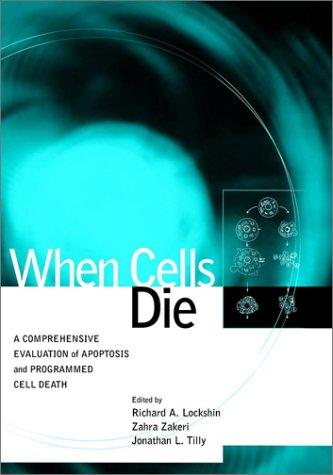
When Cells Die: A Comprehensive Evaluation of Apoptosis and Programmed Cell Death
0
0
As an Amazon Associate and affiliate partner, Menrva Books earns from qualifying purchases. Learn more
Author Description
When Cells Die establishes a coherent framework for the study of cell death - cutting across viewpoints and disciplines and consolidating disparate research efforts. Leading international researchers describe a wide range of topics, including evaluation methods for programmed cell death and apoptosis in numerous tissues and circumstances; genetic mechanism, signal transduction, and observed manifestations of physiological cell death; model systems ranging from nematodes to humans; relevant work in cancer research, AIDS, immune disorders, fertility, eye disease, and Alzheimer's disease; and more. When Cells Die offers a comprehensive introduction to an intriguing discipline, insight into areas in need of exploration, and information on new techniques and therapeutic applicationsall supported with diagrams and flowcharts and a fully cross-referenced and indexed text. It is important reading for anyone working in cell and developmental biology, neuroscience, immunology, cancer research, and virology. It is also useful for advanced undergraduate and graduate-level students, postdoctoral fellows, and researchers just entering the field.
Menrva's Summary
THE THESIS
This book establishes a coherent framework for the study of cell death, consolidating disparate research efforts across disciplines. Leading international researchers detail evaluation methods for programmed cell death and apoptosis in numerous tissues and circumstances. The text explores genetic mechanisms, signal transduction, and observed manifestations of physiological cell death, utilizing model systems from nematodes to humans. It also covers relevant work in cancer research, AIDS, immune disorders, fertility, eye disease, and Alzheimer's disease.
THE SCOPE MAP
- Evaluation methods for programmed cell death and apoptosis
- Genetic mechanisms and signal transduction of physiological cell death
- Manifestations of physiological cell death
- Model systems from nematodes to humans
- Applications in cancer research
- Applications in AIDS research
- Applications in immune disorders
- Applications in fertility, eye disease, and Alzheimer's disease
THE AUTHORITY PERSPECTIVE
This book is presented as an important reading for professionals and students entering the field of cell and developmental biology, neuroscience, immunology, cancer research, and virology. It is designed to offer a comprehensive introduction to the discipline, highlight areas for future exploration, and detail new techniques and therapeutic applications. The text is supported by diagrams, flowcharts, and a cross-referenced, indexed format, suggesting a thorough and accessible reference for its target audience.
Page Count:
504
Publication Date:
1998-01-01
ISBN-10:
0471165697
Science
Non-Fiction
Neuroscience
Medical research
Developmental Biology
Cancer Research
Virology
Cell Biology
Immunology
Community Tags
Similar Books