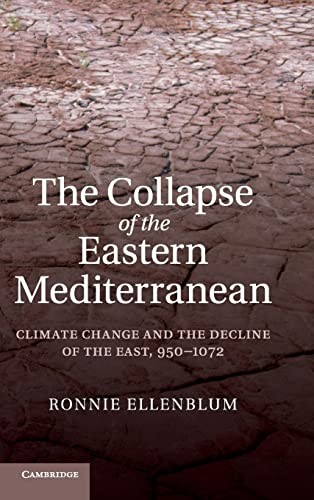
The Collapse of the Eastern Mediterranean
0
0
As an Amazon Associate and affiliate partner, Menrva Books earns from qualifying purchases. Learn more
Author Description
As a 'Medieval Warm Period' prevailed in Western Europe during the tenth and eleventh centuries, the eastern Mediterranean region, from the Nile to the Oxus, was suffering from a series of climatic disasters which led to the decline of some of the most important civilisations and cultural centres of the time. This provocative study argues that many well-documented but apparently disparate events - such as recurrent drought and famine in Egypt, mass migrations in the steppes of central Asia, and the decline in population in urban centres such as Baghdad and Constantinople - are connected and should be understood within the broad context of climate change. Drawing on a wealth of textual and archaeological evidence, Ronnie Ellenblum explores the impact of climatic and ecological change across the eastern Mediterranean in this period, to offer a new perspective on why this was a turning point in the history of the Islamic world
Menrva's Summary
THE THESIS
This study investigates the interconnectedness of climatic disasters and the decline of major civilizations in the eastern Mediterranean during the tenth and eleventh centuries. Drawing on extensive textual and archaeological evidence, Ronnie Ellenblum posits that seemingly isolated events such as widespread drought in Egypt, significant population migrations in central Asia, and urban population decreases in Baghdad and Constantinople were all consequences of a broader pattern of climate change. The book challenges conventional historical narratives by framing these developments within a unified ecological context, offering a new interpretation of a critical period in the history of the Islamic world and its surrounding regions.
THE SCOPE MAP
- Analysis of climatic events in the eastern Mediterranean from the Nile to the Oxus during the tenth and eleventh centuries.
- Examination of the impact of drought and famine on Egypt.
- Investigation of mass migrations in the steppes of central Asia.
- Study of population decline in urban centers like Baghdad and Constantinople.
- Argument for the connection between these events and climate change.
- Integration of textual and archaeological evidence to support the thesis.
- A new perspective on a turning point in the history of the Islamic world.
THE AUTHORITY PERSPECTIVE
This book offers a provocative reinterpretation of a pivotal period in the eastern Mediterranean's history, arguing for the unifying influence of climate change on a range of documented societal declines. By connecting disparate events across a vast geographical area, it provides a novel framework for understanding the era's transformations. The study's reliance on both textual and archaeological evidence suggests a rigorous approach to historical inquiry. It is likely to be of interest to scholars and students of medieval history, environmental history, and the history of the Islamic world.
Page Count:
284
Publication Date:
2012-01-01
ISBN-10:
1107023351
ISBN-13:
9781107023352
History
Non-Fiction
Byzantine History
Islamic History
Climate Change
Archaeology
Community Tags
Similar Books