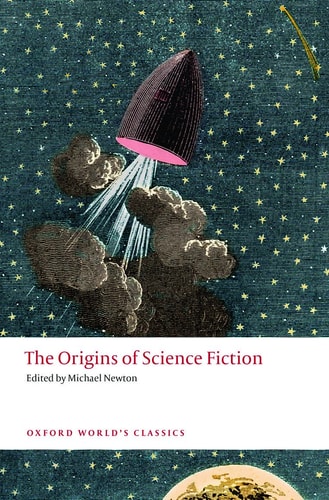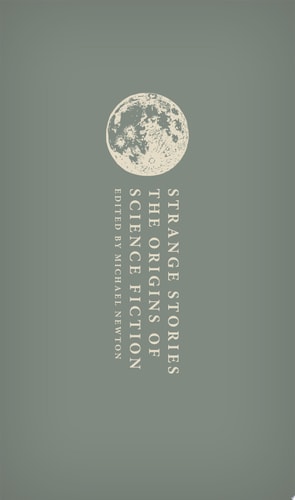
The Origins of Science Fiction
0
0
As an Amazon Associate and affiliate partner, Menrva Books earns from qualifying purchases. Learn more
Author Description
'Few travelled in these days, for, thanks to the advance of science, the earth was exactly alike all over. Rapid intercourse, from which the previous civilization had hoped so much, had ended by defeating itself. What was the good of going to Peking when it was just like Shrewsbury?', The Machine Stops, E. M. ForsterThis anthology provides a selection of science-fiction tales from the close of the 'Romantic' period to the end of the First World War. It gathers together classic short stories, from Edgar Allan Poe's playful hoaxes to Gertrude Barrows Bennett's feminist fantasy. In this way, the book shows the vitality and literary diversity of the field, and also expresses something of the potent appeal of the visionary, the fascination with science, and the allure of an imagined future that characterised this period. An excellent resource for those interested in science fiction, and also an essential volume for understanding the development of the genre.In his introduction, Michael Newton draws together literary influences from Jonathan Swift to Mary Shelley, the interest in the irrational and dreaming mind, and the relation of the tales to the fact of Empire and the discoveries made by anthropology. He also considers how the figure of the alien and non-human 'other' complicated contemporary definitions of the human being.
Menrva's Summary
THE THESIS
This volume investigates the historical emergence and thematic evolution of science fiction from the late Romantic period through the conclusion of the First World War. Dr. Michael Newton, a scholar of literature, utilizes a curated selection of short fiction to argue that the genre developed as a response to rapid technological advancement, imperial expansion, and shifting anthropological understandings of the human condition. By tracing influences from authors like Jonathan Swift and Mary Shelley, the text establishes a framework for viewing early science fiction as a critical reflection on the irrational mind and the definition of the non-human other.
THE SCOPE MAP
What You Will Find
- A chronological selection of short stories spanning the late 18th century to 1918.
- Analysis of the literary lineage connecting early speculative fiction to modern genre conventions.
- Examination of the impact of colonial expansion and anthropological discovery on narrative themes.
- Discussion of the 'alien' figure as a tool for questioning contemporary human identity.
THE AUTHORITY PERSPECTIVE
Scholars and readers frequently cite this collection as a rigorous academic resource for understanding the roots of speculative literature. The introduction is noted for its dense, insightful synthesis of historical context and literary theory, making it a standard reference for students of the genre.
Page Count:
464
Publication Date:
2022-07-01
Publisher:
Oxford University Press
ISBN-10:
0198853610
ISBN-13:
9780198853619
History
Science Fiction
Short Stories
Literary Criticism
English literature
Anthology