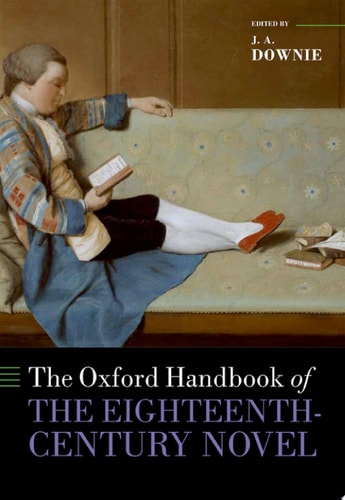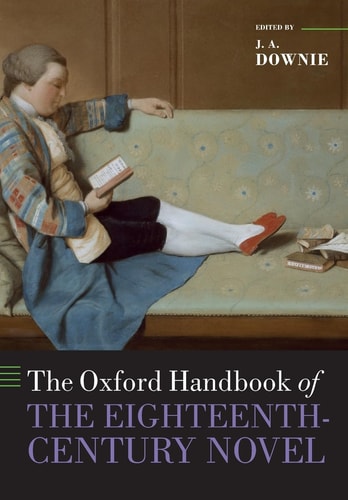
The Oxford Handbook of the Eighteenth-Century Novel
0
0
As an Amazon Associate and affiliate partner, Menrva Books earns from qualifying purchases. Learn more
Author Description
Although the emergence of the English novel is generally regarded as an eighteenth-century phenomenon, this is the first book to be published professing to cover the 'eighteenth-century English novel' in its entirety. This Handbook surveys the development of the English novel during the 'long' eighteenth century-in other words, from the later seventeenth century right through to the first three decades of the nineteenth century when, with the publication of the novels of Jane Austen and Walter Scott, 'the novel' finally gained critical acceptance and assumed the position of cultural hegemony it enjoyed for over a century. By situating the novels of the period which are still read today against the background of the hundreds published between 1660 and 1830, this Handbook not only covers those 'masters and mistresses' of early prose fiction-such as Defoe, Richardson, Fielding, Sterne, Burney, Scott and Austen-who are still acknowledged to be seminal figures in the emergence and development of the English novel, but also the significant number of recently-rediscovered novelists who were popular in their own day. At the same time, its comprehensive coverage of cultural contexts not considered by any existing study, but which are central to the emergence of the novel, such as the book trade and the mechanics of book production, copyright and censorship, the growth of the reading public, the economics of culture both in London and in the provinces, and the re-printing of popular fiction after 1774, offers unique insight into the making of the English novel.
Menrva's Summary
THE THESIS
This volume investigates the evolution of the English novel from the late seventeenth century through the early nineteenth century, questioning how the form achieved cultural hegemony. J. A. Downie, a distinguished scholar in the field, synthesizes historical data and literary analysis to map the transition of prose fiction from a marginal pursuit to a dominant cultural force. The work argues that the novel's development cannot be understood in isolation, but must be viewed through the lens of the material conditions of the era, including the economics of the book trade and the expansion of the reading public.
THE SCOPE MAP
What You Will Find
- Comprehensive survey of the 'long' eighteenth century, spanning 1660 to 1830.
- Analysis of the mechanics of book production, including copyright, censorship, and printing practices.
- Evaluation of both canonical figures like Defoe, Fielding, and Austen alongside lesser-known, popular novelists of the period.
- Examination of the socio-economic factors influencing the growth of the reading public in London and the provinces.
THE AUTHORITY PERSPECTIVE
Experts recognize this handbook as a foundational reference for students and scholars of eighteenth-century literature. Readers frequently note the academic density of the prose, which provides a rigorous and exhaustive overview of the period's literary landscape.
Page Count:
620
Publication Date:
2020-04-09
Publisher:
Oxford University Press
ISBN-10:
0198857330
ISBN-13:
9780198857334
History
Academic
English literature
Literary Criticism
Reference