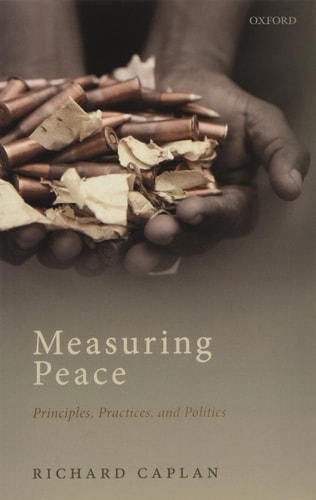
Measuring Peace: Principles, Practices, and Prospects
0
0
As an Amazon Associate and affiliate partner, Menrva Books earns from qualifying purchases. Learn more
Author Description
How can we know if the peace that has been established following a civil war is a stable peace?More than half of all countries that experienced civil war since World War II have suffered a relapse into violent conflict, in some cases more than once. Meanwhile, the international community expends billions of dollars and deploys tens of thousands of personnel each year in support of efforts to build peace in countries emerging from violent conflict.This book argues that efforts to build peace are hampered by the lack of effective means of assessing progress towards the achievement of a consolidated peace. Rarely, if ever, do peacebuilding organizations and governments seek to ascertain the quality of the peace that they are helping to build and the contribution that their engagement is making (or not) to the consolidation of peace. More rigorous assessments of the robustness of peace are needed. These assessments require clarity about the characteristics of, and the requirements for, a stable peace. This in turn requires knowledge of the local culture, local history, and the specific conflict dynamics at work in a given conflict situation. Better assessment can inform peacebuilding actors in the reconfiguration and reprioritization of their operations in cases where conditions on the ground have deteriorated or improved. To build a stable peace, it is argued here, it is important to take the measure of peace.
Menrva's Summary
THE THESIS
This book investigates the critical lack of effective methodologies for assessing the stability and consolidation of peace in post-civil war societies. Richard Caplan, a professor of international relations, examines the high rate of conflict relapse following international intervention. He argues that current peacebuilding efforts are hindered by an inability to measure the quality of peace, proposing a framework that integrates local cultural knowledge and specific conflict dynamics to improve operational outcomes.
THE SCOPE MAP
What You Will Find
- Analysis of post-conflict relapse rates since World War II
- Frameworks for evaluating the robustness of peacebuilding operations
- Methodologies for incorporating local history and cultural context into peace assessments
- Strategies for reconfiguring international interventions based on ground-level conditions
THE AUTHORITY PERSPECTIVE
Experts identify this work as a significant contribution to the field of peacebuilding, noting its practical focus on operational assessment. Readers frequently highlight the clarity of the author's argument regarding the necessity of context-specific metrics in international intervention.
Page Count:
176
Publication Date:
2021-08-15
Publisher:
Oxford University Press
ISBN-10:
0198867700
ISBN-13:
9780198867708
History
International relations
Conflict Resolution
Peace studies
Community Tags
Similar Books