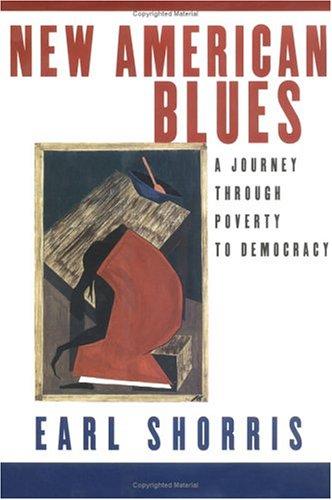
New American Blues
0
0
As an Amazon Associate and affiliate partner, Menrva Books earns from qualifying purchases. Learn more
Author Description
In a narrative of unsparing detail leavened by compassion and even hope, Earl Shorris takes us inside the lives of the poor - in Oakland, rural Tennessee, El Paso, the South Bronx, and many points in between - so that we understand who they are and see through their eyes the "surround of force" that is their horizon, that prevents them from achieving a full and true citizenship. So rich is this book in the words and thoughts of the poor themselves that they are in a sense its authors. Like any good story, this one has a beginning, a middle, and an end. We begin by listening to what the poor have to say about their lives. Once we know who they are and how much like us they are, we are ready to understand the world they live in, and why they are poor. Finally, and most surprisingly, we are asked to consider a revolutionary idea that has been taking quiet shape before our eyes all through the narrative: if the poor are human, and if the cultivation of their humanity benefits both society and the poor themselves, then why not teach them the humanities as the basic tools of citizenship? In order to test his theory, Shorris started a school on the Lower East Side of New York City. He used donated books and borrowed space, and he enlisted friends to help him teach logic, poetry, art, and moral philosophy to a group of young people whose collective background included prison, hard drugs, and homelessness. This experiment, which forms the triumphant climax of New American Blues, yielded extraordinary results: a majority of the students are now enrolled in four-year colleges, and it is no exaggeration to say that their lives have been transformed. One of the students, describing a difficult decision in his personal life, said: "I asked myself, 'What would Socrates do?'". Imagine a solution to poverty far less costly than welfare or prison, one that encourages a reconnection to public life. Imagine an argument so powerful that it prevails against the cruel lies of The Bel
Menrva's Summary
THE THESIS
The book investigates the systemic forces that perpetuate poverty in America and proposes a radical educational solution. Earl Shorris, drawing on extensive fieldwork in diverse impoverished communities across the United States, presents a compassionate yet unsparing portrait of the lives of the poor. He argues that their circumstances are shaped by an oppressive 'surround of force' that limits their opportunities and prevents full citizenship. Shorris posits that by teaching the humanities, the poor can cultivate their humanity and gain the tools for active citizenship.
THE SCOPE MAP
- Detailed ethnographic accounts from impoverished communities in Oakland, rural Tennessee, El Paso, and the South Bronx.
- Analysis of the societal structures and forces that contribute to persistent poverty.
- First-hand accounts and direct quotes from individuals experiencing poverty, forming a core part of the narrative.
- An exploration of the author's experiment in establishing a school to teach logic, poetry, art, and moral philosophy to disadvantaged youth.
- Case studies of the transformative impact of humanities education on students' lives, including their pursuit of higher education.
- A proposal for a new approach to poverty reduction through the cultivation of humanistic understanding and citizenship.
THE AUTHORITY PERSPECTIVE
The book is regarded as a deeply empathetic and insightful examination of poverty in America, notable for its rich use of the voices of the poor themselves. Shorris's proposal to use humanities education as a tool for citizenship and poverty alleviation is presented as a revolutionary idea tested through a successful educational experiment. The narrative is characterized by its compassionate yet unflinching detail, offering a hopeful perspective on societal change. The author's personal involvement in founding a school for disadvantaged youth forms a powerful, transformative climax.
Page Count:
432
Publication Date:
1997-01-01
ISBN-10:
0393045544
Autobiography
Non-Fiction
Social Issues
Sociology
Education
Poverty
American Studies
Community Tags
Similar Books