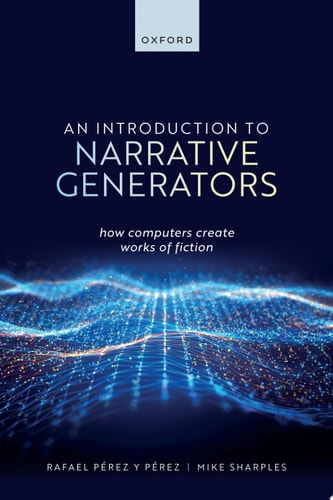
An Introduction to Narrative Generators: How Computers Create Works of Fiction
0
0
As an Amazon Associate and affiliate partner, Menrva Books earns from qualifying purchases. Learn more
Author Description
This book describes how computer programs can generate narratives and how studies of computational narrative can illuminate how humans tell stories.Combining an introduction to relevant concepts related to automatic storytelling with accessible descriptions of well-known computer programs that illustrate how such concepts are employed, the book is aimed at an interdisciplinary audience and assumes little or no background in computer science.The book introduces the most relevant techniques employed over the last 60 years for the development of computer models for narrative generation, including narrative templates, problem-solving, planning, author engagement and reflection, and statistical methods such as deep neural networks, ending with an examination of the societal implications of the development of automatic narrative generator systems.
Menrva's Summary
THE THESIS
This book investigates the mechanisms by which computer programs generate narratives and how these computational models provide insight into the fundamental nature of human storytelling. Authors Mike Sharples and Rafael Pérez y Pérez synthesize sixty years of research into a framework accessible to interdisciplinary readers. By examining both the technical architecture of narrative systems and the cognitive processes of human authors, the text establishes a foundation for understanding the intersection of machine logic and creative expression.
THE SCOPE MAP
What You Will Find
- Historical overview of narrative generation techniques spanning six decades
- Explanations of core methodologies including narrative templates, planning, and problem-solving
- Analysis of advanced statistical approaches such as deep neural networks
- Discussion regarding the societal and ethical implications of automated storytelling systems
THE AUTHORITY PERSPECTIVE
Experts recognize this work as a foundational text for those seeking to understand the technical evolution of computational creativity. Readers frequently note the clarity of the prose, which successfully demystifies complex algorithmic concepts for a non-technical audience.
Page Count:
224
Publication Date:
2023-01-01
Publisher:
Oxford University Press
ISBN-10:
0198876602
ISBN-13:
9780198876601
Non-Fiction
Computer Science
Technology
Narratology
Community Tags
Similar Books