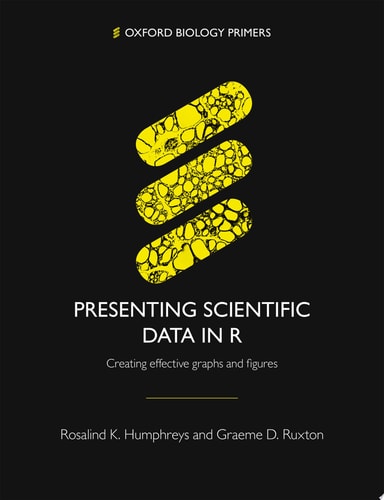
Presenting Scientific Data in R
0
0
As an Amazon Associate and affiliate partner, Menrva Books earns from qualifying purchases. Learn more
Author Description
Written primarily for students embarking on an undergraduate bioscience degree, this primer provides an accessible, straightforward, and approachable guide to data presentation using R. It offers valuable and widely applicable advice on how to choose the most appropriate type of graph for different types of data, and guides readers from the basics of plotting clear figures to producing polished and effective visuals, illustrating the core concepts and features of excellent graphing. This primer uses simple and engaging biology-based example data sets to take readers from the essential aspects of basic plots to more advanced graphing techniques and details. Digital formats and resources The book is available for students and institutions to purchase in a variety of formats, and is supported by online resources: - The e-book offers a mobile experience and convenient access along with functionality tools, navigation features, and links that offer extra learning support: www.oxfordtextbooks.co.uk/ebooks - Online resources include extended supplementary resources to guide use of R, multiple choice questions for students to check their understanding, and, for registered adopters, figures and tables from the book
Menrva's Summary
THE THESIS
This primer investigates the fundamental question of how undergraduate bioscience students can effectively translate complex biological data into clear, professional visual representations using the R programming language. The author, Humphreys, provides a structured pedagogical framework designed to bridge the gap between raw data sets and polished graphical output. By focusing on the specific needs of students in the life sciences, the text establishes a logical progression from basic plotting commands to sophisticated visualization techniques. The book serves as a technical manual that emphasizes the selection of appropriate graph types based on the underlying structure of the data.
THE SCOPE MAP
What You Will Find
- Methodologies for selecting the most appropriate graph types for diverse biological data sets
- Step-by-step tutorials on transitioning from basic plotting to advanced visualization techniques
- Practical application of R programming syntax within a bioscience context
- Supplementary digital resources including multiple-choice assessment questions and downloadable data sets
THE AUTHORITY PERSPECTIVE
Experts and educators identify this text as a highly accessible entry point for students who lack prior experience with statistical programming. Readers frequently note the clarity of the instructional design, which avoids unnecessary technical jargon in favor of practical, biology-focused examples.
Page Count:
205
Publication Date:
2023-01-01
Publisher:
Oxford University Press, USA
ISBN-10:
0198870477
ISBN-13:
9780198870470
Science
Data Science
Education
Programming
Statistics
Reference
Community Tags
Similar Books





![Instructor's resource manual to accompany Biology, 3nd edition [by] Karen Arms, Pamela S. Camp](https://storage.googleapis.com/menrva_img_storage/covers/generated/9780030036477.jpg)