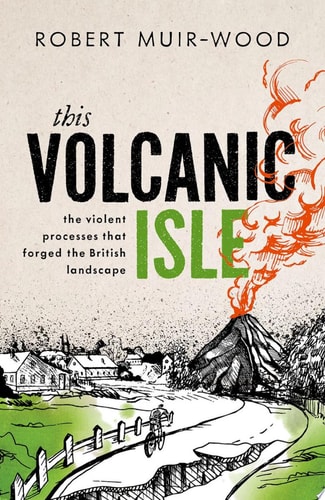
This Volcanic Isle: The Violent Processes That Forged the British Landscape
0
0
As an Amazon Associate and affiliate partner, Menrva Books earns from qualifying purchases. Learn more
Author Description
From the natural geometry of the Giant's Causeway to the sarsen slabs used to build Stonehenge, we are surrounded by evidence for the extraordinary geological forces that shaped the British Isles. Running coast to coast through Devon is 'Sticklepath', Britain's 'San Andreas', a geological fault with the two sides displaced horizontally by several kilometres, all within the recent geological past. The Sticklepath Fault is just one manifestation of the rich tectonic history of the British region since the asteroid collision that ended the reign of the dinosaurs, 66 million years ago. Raised out of the Chalk Sea, the original Albion was a thickly forested island a thousand kilometres long, surrounded by chalk cliffs, punctuated with great volcanoes, and the site of two trial 'spreading ridge' plate-boundaries. As the volcanoes shifted west, and Greenland separated from Europe, the wind-blown volcanic ash laid the strata on which London was founded. The vertical Needles, known to every Isle of Wight sailor, are part of the northern foothills of the Pyrenees. When the collision subsided, rifting created a garland of Celtic lakes from Brittany to the Outer Hebrides. In This Volcanic Isle Robert Muir-Wood explores the rich geological history of the British Isles, and its resulting legacy. Along the way he introduces the personalities who shared a fascination for Britain's tectonic history, including Charles Darwin the geologist, Tennyson the science-poet, and Benoit Mandelbrot, the pure mathematician who labelled the west coast of Britain a fractal icon. Here is the previously untold story of how earthquakes and eruptions, plumes and plate boundaries, built the British Isles.
Menrva's Summary
THE THESIS
This book investigates the complex tectonic and volcanic processes that have shaped the physical landscape of the British Isles over the last 66 million years. Author Robert Muir-Wood, a recognized expert in natural hazards and risk assessment, synthesizes geological data and historical observation to argue that Britain's geography is the result of violent, transformative forces rather than static stability. He utilizes a framework that connects deep-time geological events to the modern-day topography and cultural landmarks found across the region.
THE SCOPE MAP
What You Will Find
- Analysis of tectonic shifts, volcanic activity, and plate boundary movements since the end of the Cretaceous period.
- Examination of specific geological features including the Sticklepath Fault, the Giant's Causeway, and the Isle of Wight.
- Historical accounts of scientific figures such as Charles Darwin, Alfred Tennyson, and Benoit Mandelbrot and their contributions to understanding the British landscape.
- An exploration of how volcanic ash and rifting events established the foundational strata for major urban centers like London.
THE AUTHORITY PERSPECTIVE
Experts and readers alike note the book's ability to bridge the gap between technical geological history and accessible narrative prose. It is frequently cited as a comprehensive resource for those interested in the intersection of physical geography and the historical development of the British Isles.
Page Count:
336
Publication Date:
2024-04-25
Publisher:
Oxford University Press
ISBN-10:
0198871627
ISBN-13:
9780198871620
Nature
History
Science
Geology
Earth Science
Community Tags
Similar Books