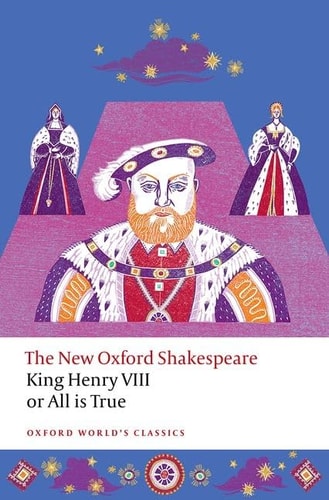
King Henry VIII; or All is True: The New Oxford Shakespeare
0
0
As an Amazon Associate and affiliate partner, Menrva Books earns from qualifying purchases. Learn more
Author Description
Multiple Contemporary Accounts Indicate That The Play Printed In 1623 With The Title The Famous History Of The Life Of King Henry The Eight Was Called All Is True When It Was First Performed At The Globe Playhouse In 1613. Consequently, When Discussing The 1613 Play We Use The Title All Is True, But When Discussing The 1623 Printing We Use King Henry Viii. The Play Was First Printed As The Last Of The English History Plays In The Folio Collection Of Shakespeare's Comedies, Histories, & Tragedies. Most Likely All Is True Was Renamed King Henry Viii As Part Of The Posthumous Publication Process, Making It Suitable To Close The Histories Section. The Core Of That Folio Sequence Of Ten Plays Is A Run Of Eight Depicting The Successive Reigns Of Richard Ii, Henry Iv, Henry V, Henry Vi, And Richard Iii From 1399 To 1485; At The End Of Richard Iii, After The Battle Of Bosworth, The Victorious Earl Of Richmond Is Crowned King (as Henry Vii). The First And Last Plays In The Folio Sequence Are Notably Detached From These Eight: King John (depicting The Monarch Who Reigned 1199-1216) And King Henry Viii (depicting The Monarch Who Reigned 1509-47). Whereas The Other Nine English History Plays Were Written In The 1590s, All Is True Was Written In 1613, The Final Year Of Shakespeare's Professional Career, And In Collaboration With John Fletcher. That Year, Shakespeare Also Co-wrote The Two Noble Kinsmen With Fletcher. In The Mid-nineteenth Century, Quantitative Analysis Of The Verse Style Established That Âll Is True Was Co-authored With Fletcher. On The Basis Of This And Much Subsequent Analysis, The New Oxford Shakespeare Attributes To Fletcher The Prologue, Scenes 1.3, 1.4, 2.1, 2.2, 3.1, 3.2.204-460, 4.1, 4.2, 5.2, 5.3, 5.4, And The Epilogue. Fletcher Wrote More Of The Text Than Shakespeare. It Is Uncertain What Kind Of Manuscript Was Used To Print King Henry Viii: It May Have Included Writing In The Two Authors' Own Hands And May Or May Not Have Been Used To Run The Play In
Menrva's Summary
THE PULSE
The play centers on the political and personal volatility of King Henry VIII’s court, specifically focusing on the downfall of Cardinal Wolsey and the rise of Anne Boleyn. The narrative follows the King’s desire to annul his marriage to Katherine of Aragon, a pursuit that triggers a cascade of shifting loyalties and power struggles within the English aristocracy. As the King navigates the constraints of divine right and the practicalities of succession, the play utilizes a episodic structure to reflect the instability of the Tudor court. The text, written in collaboration with John Fletcher, presents a complex view of historical events through a series of public spectacles and private betrayals.
INSIDE THE PAGES
- Collaborative authorship between William Shakespeare and John Fletcher.
- Focus on the transition of power and the fall of high-ranking officials.
- Use of formal, elevated verse and prose characteristic of the Jacobean era.
- Inclusion of elaborate stage directions reflecting the theatrical practices of the Globe Playhouse.
- Exploration of the intersection between personal desire and state policy.
- Structural emphasis on the birth of Elizabeth I as a concluding resolution.
- Thematic examination of the transience of worldly power and reputation.
- Historical framing that distinguishes the play from earlier Elizabethan history cycles.
THE COLLECTIVE ECHO
Readers and critics frequently highlight the distinct stylistic shifts between the scenes attributed to Shakespeare and those written by Fletcher. Discussion often centers on the play's departure from the earlier, more martial history plays, noting its focus on pageantry and the internal politics of the court. Scholars emphasize the work's unique position as a late-career collaboration that reflects the changing theatrical tastes of the 1613 audience. Many analyses focus on the play's treatment of Katherine of Aragon, often citing her portrayal as a significant emotional anchor amidst the political maneuvering. The work remains a subject of interest for those examining the evolution of Shakespeare’s dramatic technique and his final contributions to the stage.
Page Count:
192
Publication Date:
2025-05-13
Publisher:
Oxford University Press
ISBN-10:
019887202X
ISBN-13:
9780198872023
Drama
Classics
Dramas & Plays
Shakespeare
Historical
Plays
Community Tags
Similar Books





Reader Comments
Share Your Thoughts
No comments yet. Be the first to share your thoughts!