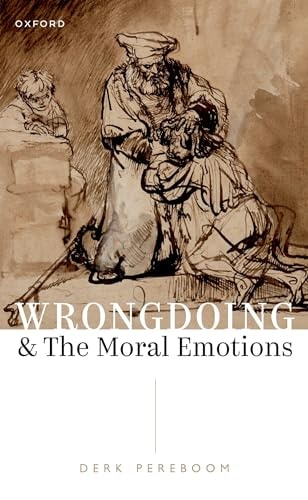
Wrongdoing and the Moral Emotions
0
0
As an Amazon Associate and affiliate partner, Menrva Books earns from qualifying purchases. Learn more
Author Description
Wrongdoing and the Moral Emotions provides an account of how we might effectively address wrongdoing given challenges to the legitimacy of anger and retribution that arise from ethical considerations and from concerns about free will. The issue is introduced in Chapter 1. Chapter 2 asks how we might conceive of blame without retribution, and proposes an account of blame as moral protest, whose function is to secure forward-looking goals such as the moral reform of the wrongdoer and reconciliation in relationships. Chapter 3 considers whether it's possible to justify effectively dealing those who pose dangerous threats if they do not deserve to be harmed, and contends that wrongfully posing a threat is the core condition for the legitimacy of defensive harming. Chapter 4 provides an account of how to treat criminals without a retributive justification for punishment, and argues for an account in which the right of self-defense provides justification for measures such as preventative detention. Chapter 5 considers how we might forgive if wrongdoers don't basically deserve the pain of being resented, which forgiveness would then renounce, and proposes that forgiveness be conceived instead as renunciation of the stance of moral protest. Chapter 6 considers how personal relationships might function without retributive anger having a role in responding to wrongdoing, and contends that the stance of moral protest, supplemented with non-retributive emotions, is sufficient. Chapter 7 surveys the options for theistic and atheistic attitudes regarding the fate of humanity in a deterministic universe, and defends an impartial hope for humanity.
Menrva's Summary
THE THESIS
This book investigates how society can effectively address wrongdoing and maintain moral accountability while rejecting the legitimacy of retributive anger and punishment. Derk Pereboom, a prominent philosopher specializing in free will and moral responsibility, utilizes a framework of moral protest to navigate the tension between deterministic views of human action and the practical necessity of responding to harm. He argues that we can maintain social order and personal integrity without relying on the traditional retributive justifications that often underpin legal and interpersonal responses to transgression.
THE SCOPE MAP
What You Will Find
- A conceptual framework for blame defined as moral protest rather than retribution.
- An analysis of defensive harming and preventative detention grounded in self-defense rights.
- A redefinition of forgiveness as the renunciation of moral protest.
- An exploration of interpersonal relationships and theistic versus atheistic perspectives on human fate in a deterministic universe.
THE AUTHORITY PERSPECTIVE
Experts recognize this work as a significant contribution to the ongoing debate regarding hard incompatibilism and its implications for criminal justice reform. Readers frequently note the academic density of the prose, which requires a strong background in philosophical ethics to fully grasp the nuances of the author's arguments.
Page Count:
224
Publication Date:
2024-01-01
Publisher:
Oxford University Press
ISBN-10:
0198903782
ISBN-13:
9780198903789
Politics
Philosophy
Ethics & Morality
Judgment ethics
Consciousness & Thought
Free Will
Forgiveness
Ethics
Crime
Moral Philosophy
Community Tags
Similar Books