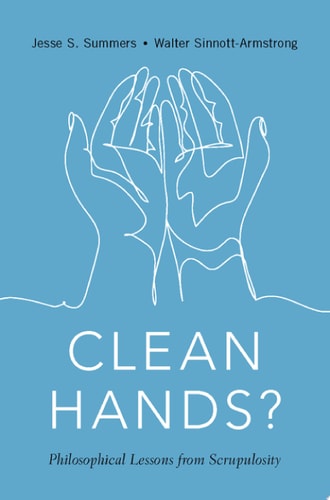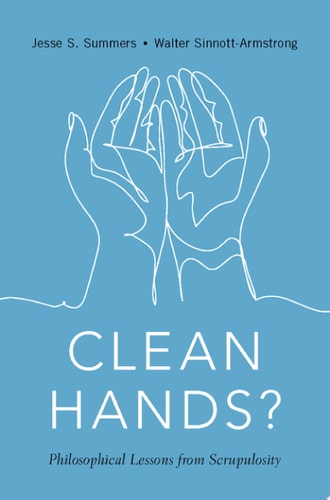
Clean Hands: Philosophical Lessons from Scrupulosity
0
0
As an Amazon Associate and affiliate partner, Menrva Books earns from qualifying purchases. Learn more
Author Description
People with scrupulosity have rigorous, obsessive moral beliefs that lead them to perform extreme, compulsive moral acts. A waitress with this condition checks and rechecks levels of cleaners and solvents to avoid any risk of poisoning her customers. Another individual asks repeatedly whether he fasted correctly, despite swallowing his own saliva. Those with scrupulosity stretch out their prayers for hours to be sure that they have said nothing incorrectly. They worry constantly about cleanliness, sinfulness, and all the ways they could be falling short of perfection.Using a range of fascinating case studies, Jesse S. Summers and Walter Sinnott-Armstrong argue that scrupulosity constitutes a mental illness and not moral sainthood. In doing so, they consider several important philosophical questions: Do the moral beliefs and judgments of those with scrupulosity differ from ours, or are these individuals just stricter in their moral observance? Are they morally responsible for their actions? Should they be pressured into psychiatric treatment, even when therapy leads them to act in ways they find immoral?Summers and Sinnott-Armstrong illustrate how psychiatric cases can inform the way we think about these and other philosophical issues, particularly those surrounding responsibility, rationality, and the nature of belief, morality, and mental illness. Clean Hands? will fascinate psychiatrists who treat patients with scrupulosity, philosophers who study morality, and anyone who has ever wondered about and struggled with the obligations and limits of morality.
Menrva's Summary
THE THESIS
This book investigates whether scrupulosity should be classified as a mental illness rather than a form of moral perfectionism. Authors Jesse S. Summers and Walter P. Sinnott-Armstrong, both scholars in philosophy and ethics, utilize clinical case studies to examine the intersection of obsessive-compulsive behavior and moral responsibility. They argue that the extreme compulsions associated with scrupulosity represent a pathological state that challenges traditional understandings of rationality and moral agency.
THE SCOPE MAP
What You Will Find
- Analysis of the distinction between rigorous moral observance and pathological obsession.
- Philosophical frameworks regarding moral responsibility and the nature of belief.
- Examination of the ethical implications of psychiatric intervention for patients who perceive treatment as a moral failing.
Scope Limits
- The text does not provide a clinical manual for the treatment of obsessive-compulsive disorder.
- It does not offer a comprehensive history of religious scrupulosity outside of its philosophical and psychiatric implications.
THE AUTHORITY PERSPECTIVE
Experts in the field of moral philosophy and psychiatry recognize this work as a significant contribution to the study of how mental health conditions intersect with ethical theory. Readers frequently note the clarity with which the authors bridge the gap between clinical observation and abstract philosophical inquiry.
Page Count:
224
Publication Date:
2019-09-26
Publisher:
Oxford University Press
ISBN-10:
0190058692
ISBN-13:
9780190058692
Psychology
Politics
Philosophy
Non-Fiction
New Used & Rental Textbooks
Personality
Ethics & Morality
Social Philosophy
Consciousness & Thought
Ethics
Mind & Body
Counseling Psychology
Mental Health
Community Tags
Similar Books