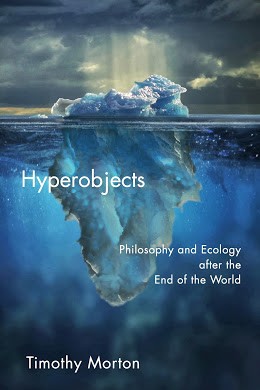
Hyperobjects
0
0
As an Amazon Associate and affiliate partner, Menrva Books earns from qualifying purchases. Learn more
Author Description
Having set global warming in irreversible motion, we are facing the possibility of ecological catastrophe. But the environmental emergency is also a crisis for our philosophical habits of thought, confronting us with a problem that seems to defy not only our control but also our understanding. Global warming is perhaps the most dramatic example of what Timothy Morton calls "hyperobjects"--entities of such vast temporal and spatial dimensions that they defeat traditional ideas about what a thing is in the first place. In this book, Morton explains what hyperobjects are and their impact on how we think, how we coexist with one another and with nonhumans, and how we experience our politics, ethics, and art. Moving fluidly between philosophy, science, literature, visual and conceptual art, and popular culture, the book argues that hyperobjects show that the end of the world has already occurred in the sense that concepts such as world, nature, and even environment are no longer a meaningful horizon against which human events take place. Instead of inhabiting a world, we find ourselves inside a number of hyperobjects, such as climate, nuclear weapons, evolution, or relativity. Such objects put unbearable strains on our normal ways of reasoning. Insisting that we have to reinvent how we think to even begin to comprehend the world we now live in, "Hyperobjects" takes the first steps, outlining a genuinely postmodern ecological approach to thought and action.
Menrva's Summary
THE THESIS
**The book investigates the philosophical and conceptual challenges posed by
THE SCOPE MAP
- An explanation of "hyperobjects"--entities of vast temporal and spatial dimensions that defy traditional understanding of things.
- Analysis of how hyperobjects impact human thought, coexistence with nonhumans, and experiences of politics, ethics, and art.
- Exploration of concepts such as climate, nuclear weapons, evolution, and relativity as examples of hyperobjects.
- An argument that traditional concepts like 'world,' 'nature,' and 'environment' are no longer meaningful horizons.
- A proposal for reinventing thought to comprehend the current world, outlining a postmodern ecological approach.
THE AUTHORITY PERSPECTIVE
The book is regarded as a significant contribution to ecological thought, introducing the concept of hyperobjects to a wider audience. It is praised for its interdisciplinary approach, drawing connections between philosophy, science, art, and popular culture. The work challenges conventional modes of understanding and calls for a fundamental shift in how we perceive our relationship with vast, complex entities. Its arguments are considered essential for grappling with contemporary environmental crises and rethinking our place within them.
Page Count:
240
Publication Date:
2013-01-01
ISBN-10:
0816689237
ISBN-13:
9780816689231
Philosophy
Science & Technology
Nature
Non-Fiction
Environment
Community Tags
Similar Books