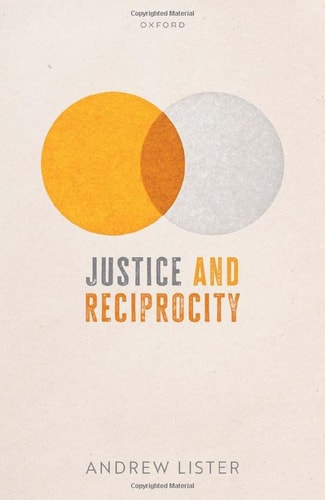
Justice and Reciprocity
0
0
As an Amazon Associate and affiliate partner, Menrva Books earns from qualifying purchases. Learn more
Author Description
Justice And Reciprocity Examines The Place Of Reciprocity In Egalitarianism, Focusing On John Rawls's Conception Of Justice As Fairness. Reciprocity Was A Central To Justice As Fairness, But Rawls Wasn't Fully Explicit About The Concept Or Its Diverse Roles. The Book's Main Thesis Is Threefold. First, Reciprocity Is Not Simply A Fact Of Human Psychology Or A Duty To Return Benefits, But A Limiting Condition On General Duties. Second, Such Conditions Are A Natural Consequence Of Thinking Of Equality As A Relational Value. However, Third, We Can Identify Limits On This Conditionality, Which Explain How Some Duties Of Justice Can Be Unconditional. The Book Explores The Ramifications Of This Argument In A Series Of Debates About Distributive Justice In Which Rawls' Theory Has Played An Organizing Role: The Justice Of Productive Incentives, Duties To Future Generations, Unconditional Basic Income, And Global Justice. In Each Domain, Thinking About Reciprocity As A Limiting Condition Rather Than Simply A Duty Helps Explain Otherwise Puzzling Aspects Of Justice As Fairness, In Some Cases Making The View More Plausible, But In Others Underlining Limits Of The View That Will Be Unappealing To Egalitarians Of A More Unilateral Bent. The Overall Aim Of The Book Is To Show That Reciprocity Involves More Than Returning Benefits, And That Limiting Justice With Reciprocity Conditions Need Not Make Justice Implausibly Undemanding. In This Way, I Hope To Rehabilitate Reciprocity For Egalitarianism
Menrva's Summary
THE THESIS
This book investigates the role of reciprocity within egalitarian frameworks, specifically examining John Rawls's theory of justice as fairness. Author Andrew Lister, a scholar of political philosophy, argues that reciprocity functions as a limiting condition on general duties rather than merely a psychological fact or a simple obligation to return benefits. By framing equality as a relational value, the text provides a systematic analysis of how reciprocity conditions interact with distributive justice, ultimately seeking to rehabilitate the concept for contemporary egalitarian thought.
THE SCOPE MAP
What You Will Find
- A critical re-evaluation of John Rawls's conception of justice as fairness.
- An analysis of reciprocity as a limiting condition on duties of justice.
- Case studies on productive incentives, intergenerational duties, basic income, and global justice.
- A philosophical framework for distinguishing between conditional and unconditional duties of justice.
THE AUTHORITY PERSPECTIVE
Scholars and students of political theory recognize this work as a rigorous contribution to the ongoing debate surrounding Rawlsian egalitarianism. Readers frequently note the academic density of the prose, which serves as a specialized resource for those examining the intersection of reciprocity and distributive justice.
Page Count:
304
Publication Date:
2025-03-15
Publisher:
Oxford University Press
ISBN-10:
0198924046
ISBN-13:
9780198924043
Philosophy
Politics
Ethics
Political Theory
Social justice
Community Tags
Similar Books