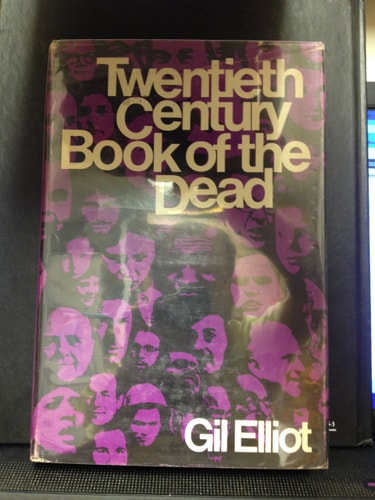
Twentieth Century Book of the Dead
0
0
As an Amazon Associate and affiliate partner, Menrva Books earns from qualifying purchases. Learn more
Author Description
This striking and original book is an attempt to describe the true and false cultures of mass death in this century. On the battlefields of the World Wars, in the death camps, in Korea and Vietnam and in all the smaller wars, pogroms, organized famines, and other disasters, some 110,000,000 have died - a nation of the dead. This is a conservative estimate; we hardly know how to count the dead. But Mr. Elliot has begun to find accurate methods and, more important, to discover ways of individualizing the figures - to analyse the ways in which men die, to see the ordeal through the eyes of the victims. Apart from engaging our sympathies, Elliot brings together for the first time the historical dimensions of the problem and historical and philosophical perspectives on it. Lest we forget, or, worse, ignore.
Menrva's Summary
THE THESIS
This work investigates the scale and cultural implications of mass death throughout the twentieth century, seeking to quantify and humanize the victims of global conflict and systematic violence. Gil Elliot, drawing upon historical records and philosophical inquiry, attempts to move beyond abstract statistics to analyze the specific conditions of mass mortality. He argues that by examining the individual experiences of victims across various disasters, pogroms, and wars, society can better confront the reality of organized destruction.
THE SCOPE MAP
What You Will Find
- Quantitative analysis of mass death events including World Wars, Korea, Vietnam, and organized famines.
- A framework for individualizing historical casualty figures.
- Philosophical perspectives on the culture of mass death.
Scope Limits
- The text does not provide an exhaustive encyclopedia of every conflict in the century.
- It does not offer policy solutions for the prevention of future mass death events.
THE AUTHORITY PERSPECTIVE
Critics and historians often cite this work for its ambitious attempt to synthesize disparate historical data into a cohesive philosophical argument. Readers frequently note the somber and analytical tone of the prose, which serves to emphasize the gravity of the subject matter.
Page Count:
256
Publication Date:
1973-01-01
Publisher:
Penguin Books
ISBN-10:
0140036679
ISBN-13:
9780140036671
Politics
History
Philosophy
Sociology
War Studies