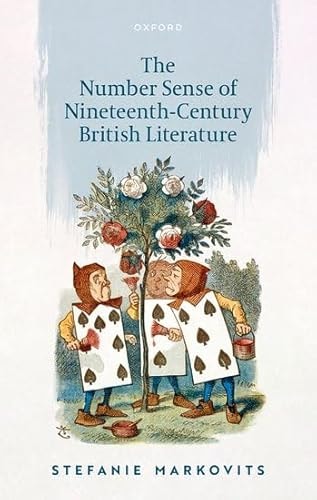
The Number Sense of Nineteenth-Century British Literature
0
0
As an Amazon Associate and affiliate partner, Menrva Books earns from qualifying purchases. Learn more
Author Description
The Number Sense Of Nineteenth-century British Literature Considers How The Avalanche Of Printed Numbers Characterizing The Period Affected Its Literature. While It Touches On The Rise Of Statistics And Developments In Politics And Mathematics, This Book Takes As Its Starting Point The Presence Of Actual Numbers-ordinal And Cardinal, Arabic, Roman, Or Spelled Out In Words-within The Century's Literary Texts. It Is Through The Deployment Of Such Figures That Texts Display Their Number Sense; Similarly, Readers Develop The Faculty Of Number Sense By Paying Attention To Their Presence. And While It Often Takes Us Back To A Specific Historical Context, Attention To A Text's Use Of Numbers Also Enables More Fundamental Recognitions About How Literature Makes Meaning. The Book Asks What Kinds Of Work, Intellectual And Ethical, Literature's Numerical Figures Perform. Why Are Some Writers Especially Numbery? What Affordances Do Numbers Wield In Various Literary Environments And Against A Specific Historical Backdrop? How Do They Relate To Aspects Like Plot And Character, Narrative And Lyric? How Interact With Seriality, So Central To Nineteenth-century Publication? When Do The Numbers Really Count, And When Do They Ask Us To Keep Count? Lingering Over Texts' Measures Illuminates The Way Numbers Help Shape Literary Works Into The Recognizable Forms We Call Genres; One Marks Both Lyric And The Bildungsroman But Looks Very Different In Each Setting. Number Sense Uncovers How Numbers Can Serve Both As Valves, Releasing Cultural Pressures, And As Fulcrums, Places Where Pressures Coincide To Create New Forms Of Literary Agency-- Provided By Publisher.
Menrva's Summary
THE THESIS
This book investigates how the proliferation of numerical figures in nineteenth-century British literature functions as a mechanism for meaning-making and cultural expression. Stefanie Markovits, a scholar of Victorian literature, examines the intersection of mathematics, statistics, and narrative form to argue that numbers are not merely decorative but perform essential intellectual and ethical work within a text. By analyzing the presence of ordinal and cardinal numbers, the author demonstrates how these figures shape genre, influence plot structure, and reflect the historical pressures of the era.
THE SCOPE MAP
What You Will Find
- Analysis of numerical usage across various literary forms including the Bildungsroman and lyric poetry.
- Examination of the relationship between serial publication and numerical frequency.
- Exploration of how numbers function as both cultural valves and structural fulcrums in narrative.
- Investigation into the historical context of statistics and mathematics in Victorian society.
THE AUTHORITY PERSPECTIVE
Scholars in the field of Victorian studies recognize this work as a rigorous inquiry into the intersection of quantitative data and literary aesthetics. Readers frequently note the academic density of the prose, which provides a specialized framework for understanding how numerical presence informs the mechanics of nineteenth-century storytelling.
Page Count:
0
Publication Date:
2025-01-01
Publisher:
New York : Oxford University Press,
ISBN-10:
0198937822
ISBN-13:
9780198937821
History
British literature
Nineteenth century
Literary Criticism
Mathematics
Academic
In literature
English literature
Community Tags
Other Editions(2)
Similar Books