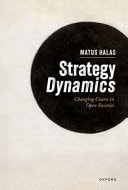
Strategy Dynamics: Changing Course in Open Societies
0
0
As an Amazon Associate and affiliate partner, Menrva Books earns from qualifying purchases. Learn more
Author Description
With a wealth of valuable empirical materials, Strategy Dynamics explores the concept of adaptation in strategic decision-making through detailed engagement with professional military education at various war colleges and three in-depth case studies of significant strategic reversals by the United States, France, and former Czechoslovakia. It examines President Ronald Reagan's decision to withdraw U.S. Marines from Lebanon in 1984, François Mitterrand's reversal of his original plan for the French exit from the European Monetary System in 1983, and Václav Havel's strategic pivot towards NATO membership for Czechoslovakia in 1991.After introducing a novel process-oriented model of strategic decision-making that highlights the positive effect of friction on strategy adaptation, the author uses process tracing to analyse factors at the individual, domestic, and international levels that enabled and triggered these strategic U-turns. The research draws on declassified and previously unavailable documents, as well as interviews with key figures involved in these strategic decisions, providing unique insights into the complexities of strategic decision-making and the process of strategy adaptation.The book compels readers to see strategy as a dynamic process, continuously evolving in response to changing circumstances, rather than as a fixed plan. In doing so, Strategy Dynamics fills a critical gap in the literature by focusing on the processes that drive strategy adaptation. It offers a comprehensive study of the conditions that contribute to open societies' ability to adapt their strategies more effectively, and it will serve as a reference for anyone dealing with strategy adaptation.
Menrva's Summary
THE THESIS
This book investigates the mechanisms of strategic adaptation in open societies, specifically questioning how and why national leaders execute significant reversals in policy. Matus Halas, a scholar of strategic studies, utilizes a process-oriented model to examine how friction within political systems influences decision-making. By synthesizing empirical data from war colleges and specific historical case studies, the author argues that strategy is not a static blueprint but a fluid process that evolves through individual, domestic, and international pressures.
THE SCOPE MAP
What You Will Find
- A process-oriented model of strategic decision-making that incorporates the role of friction.
- Comparative analysis of strategic reversals in the United States, France, and Czechoslovakia.
- Primary source evidence including declassified documents and interviews with key political figures.
- An examination of the interplay between individual leadership, domestic politics, and international constraints.
THE AUTHORITY PERSPECTIVE
Experts identify this work as a rigorous contribution to the study of strategic policy and political adaptation. Readers frequently note the academic density of the prose and the depth of the historical research provided in the case studies.
Page Count:
224
Publication Date:
2025-06-04
Publisher:
Oxford University Press
ISBN-10:
0198951906
ISBN-13:
9780198951902
Politics
History
Military Strategy
Engineering
International relations
World politics
Decision Making
Community Tags
Similar Books