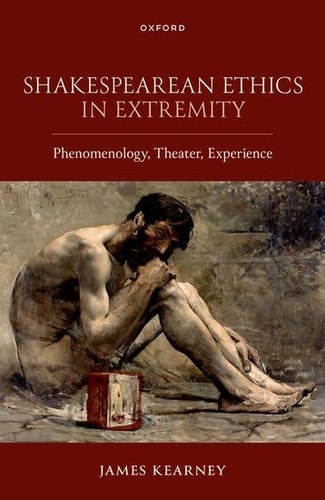
Shakespearean Ethics in Extremity: Phenomenology, Theater, Experience
0
0
As an Amazon Associate and affiliate partner, Menrva Books earns from qualifying purchases. Learn more
Author Description
Shakespearean Ethics In Extremity Addresses Forms Of Ethical Experience On The Shakespearean Stage. Early Modern Theater Traffics In The Vicarious Experience Of Ethics, Often Ethics In Some Extreme Or Impossible Circumstance. What Does It Feel Like To Be Enjoined To Avenge Your Father's Murder? What Is It Like To Banish Your Daughter Or Disavow Your Community? To Murder? This Book Contends That Shakespearean Theater, Fundamentally Oriented To The Experiential, Invites Its Audiences To Entertain And To Be Entertained By What The Philosopher Bernard Williams Calls A Phenomenology Of The Ethical Life. The Early Modern World Inherited And Developed Rhetorical And Philosophical Practices Geared Toward The Creation Of Immersive Virtual Experience. These Phenomenological Arts Share Underlying Assumptions About The Cultivation And Management Of The Self As Well As A Straightforward Orientation Toward Ethics. Taking Up Key Concepts From The Long History Of Moral Philosophy - Recognition, Obligation, Decision, Luck - Shakespearean Ethics In Extremity Brings Together A Discursive History Of Ideas And The More Phenomenological Realms Of Body And Affect, Environment And World. With A Concentrated Focus On Formally Inventive Plays Written In The Later Part Of Shakespeare's Theatrical Career - King Lear, Timon Of Athens, Macbeth, Pericles, The Tempest, The Winter's Tale - The Book Explores Shakespearean Theater As An Arena Or Lab In Which The Experience Of Ethics In Extremis Is Simulated Or Reverse Engineered, Counterfeited Or Created-- Provided By Publisher.
Menrva's Summary
THE THESIS
This book investigates how Shakespearean theater functions as a laboratory for simulating ethical dilemmas and the phenomenological experience of moral decision-making in extreme circumstances. James Kearney, a scholar of early modern literature, synthesizes moral philosophy with theatrical history to argue that Shakespeare’s later plays were designed to immerse audiences in the visceral, affective, and logical complexities of the ethical life. By examining the intersection of rhetorical tradition and dramatic art, the author demonstrates how these works serve as simulations of human agency under pressure.
THE SCOPE MAP
What You Will Find
- A philosophical framework utilizing Bernard Williams’s concept of the phenomenology of the ethical life.
- An analysis of late-career Shakespearean plays including King Lear, Macbeth, and The Tempest.
- A historical examination of early modern rhetorical practices aimed at creating immersive virtual experiences.
- A thematic exploration of moral concepts such as recognition, obligation, decision, and luck.
THE AUTHORITY PERSPECTIVE
Scholars in the field of early modern studies recognize this work as a significant contribution to the intersection of performance theory and moral philosophy. Readers frequently note the academic density of the prose, which effectively bridges the gap between historical discourse and contemporary phenomenological inquiry.
Page Count:
272
Publication Date:
2025-07-03
Publisher:
Oxford University Press
ISBN-10:
0198954565
ISBN-13:
9780198954569
Philosophy
Shakespeare
Ethics
Theater History
Literary Criticism
Shakespeare Studies
Dramas & Plays
Community Tags
Similar Books