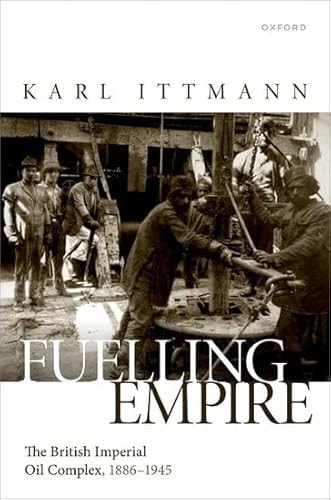
Fuelling Empire
0
0
As an Amazon Associate and affiliate partner, Menrva Books earns from qualifying purchases. Learn more
Author Description
Beginning In The Late Nineteenth Century, British Companies Used The Resources Of Empire To Create An Imperial Oil Industry That Controlled 20% Of Global Oil Reserves By 1939 And Allowed For The Movement Of Capital And Labor Between Regions And Companies. The Imperial Oil Complex Encompassed Colonies-burma And Trinidad -and Dependent States-iraq And Iraq. In Both, The Imperial State Used Its Political And Military Power To Support British Oil Interests. The Oil Complex Drew On The Resources Of Empire But Also Bolstered It With Profits And Tax Revenues While A Global Set Of Oil Sites Supplied The British Military And Civilian Consumers. British Companies Built An Infrastructure Of Oil Production That Gave Them Quasi-state Power In Oil Regions While Connecting These Areas To Global And Imperial Networks Of Communication And Transportation. Fuelling Empire Highlights The Significance Of Britain To The Development Of The Global Oil Industry. It Demonstrates The Ways In Which The Global Histories Of Oil And Empire Are Inextricably Interlinked. The Imperial Oil Complex Relied On A Racially Stratified Hierarchy Of Labour Where White Supervisors Managed Indigenous And Migrant Workers. The Harsh Conditions Of Work And Low Pay Fuelled Labour Conflicts That Resonated With Emerging Colonial Nationalist Movements That Sought To Limit The Power Of Oil Companies. Despite Robust Private And State Security Operations, The Imperial Oil Complex Faced Greater Insecurity Before World War Ii. While The Imperial Oil Complex Survived The War, In The Postwar Era Decolonization And Britain's Financial Weakness Led To Its Decline
Menrva's Summary
THE THESIS
This work investigates the symbiotic relationship between the British Empire and the global oil industry, questioning how imperial power facilitated the creation of a massive, state-supported energy infrastructure. Karl Ittmann, a professor of history at the University of Houston, utilizes archival research and historical analysis to demonstrate how British companies leveraged colonial resources and military support to secure global oil reserves. The text argues that the imperial oil complex was not merely a commercial enterprise but a structural component of British geopolitical dominance that relied on racial hierarchies and state-sanctioned labor exploitation.
THE SCOPE MAP
What You Will Find
- Analysis of the British imperial oil complex in Burma, Trinidad, and Iraq.
- Examination of the intersection between corporate infrastructure and state military power.
- Documentation of the racially stratified labor systems and subsequent nationalist resistance.
- Historical overview of the industry's rise from the late nineteenth century through its postwar decline.
THE AUTHORITY PERSPECTIVE
Historians and scholars of colonial studies recognize this text as a rigorous examination of the material foundations of the British Empire. Readers frequently note the academic density of the prose and the author's meticulous use of primary sources to connect corporate history with global political shifts.
Page Count:
0
Publication Date:
2025-01-01
Publisher:
Oup Oxford
ISBN-10:
0198963270
ISBN-13:
9780198963271
Economics
History
Imperialism
Energy
Colonialism
Business History
Community Tags
Similar Books