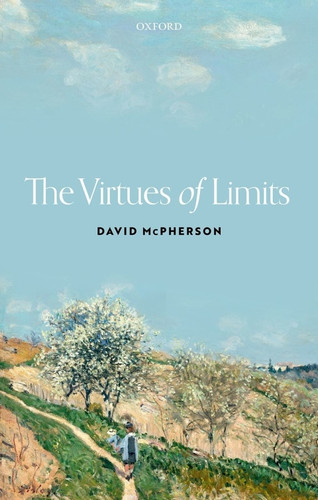
The Virtues of Limits
0
0
As an Amazon Associate and affiliate partner, Menrva Books earns from qualifying purchases. Learn more
Author Description
Human beings seek to transcend limits. This is part of our potential greatness, since it is how we can realize what is best in our humanity. However, the limit-transcending feature of human life is also part of our potential downfall, as it can lead to dehumanization and failure to attain important human goods and to prevent human evils. Exploring the place of limits within a well-lived human life this works develops and defends an original account of limiting virtues, which are concerned with recognizing proper limits in human life. The limiting virtues that are the focus are humility, reverence, moderation, contentment, neighborliness, and loyalty, and they are explored in relation to four kinds of limits: existential limits; moral limits; political limits; and economic limits. These virtues have been underexplored in discussions about virtue ethics, and when they have been explored it has not been with regard to the general issue of the place of limits within a well-lived human life. The account of the limiting virtues provided here is intended as a counter to other prominent approaches to ethics: namely, autonomy-centered approaches and consequentialist (or maximizing) approaches. This account is also used to address a number of important contemporary issues such as genetic engineering, cosmopolitanism vs. patriotism, distributive justice, and the ethical status of growth-based economics.
Menrva's Summary
THE THESIS
This work investigates whether the human drive to transcend limits is inherently beneficial or if a well-lived life requires the cultivation of specific limiting virtues. David McPherson, a scholar of virtue ethics, argues that while human potential is often defined by expansion, the failure to recognize existential, moral, political, and economic boundaries leads to dehumanization. He proposes a framework of limiting virtues—including humility, reverence, and moderation—to counter contemporary autonomy-centered and consequentialist ethical models.
THE SCOPE MAP
What You Will Find
- A taxonomy of six limiting virtues: humility, reverence, moderation, contentment, neighborliness, and loyalty.
- An analytical framework categorizing limits into four distinct domains: existential, moral, political, and economic.
- A critical evaluation of autonomy-centered and growth-based economic ethical theories.
- Application of the limiting virtues to modern dilemmas such as genetic engineering, distributive justice, and the tension between cosmopolitanism and patriotism.
THE AUTHORITY PERSPECTIVE
Scholars and ethicists recognize this text as a significant contribution to the field of virtue ethics, particularly for its focus on neglected character traits. Readers frequently note the academic density of the prose, which is best suited for those already familiar with contemporary moral philosophy and political theory.
Page Count:
208
Publication Date:
2025-10-14
Publisher:
Oxford University Press
ISBN-10:
0198969651
ISBN-13:
9780198969655
Philosophy
Politics
Political Philosophy
Conduct Of Life
Virtue Ethics
Virtue
Philosophy history
Ethics & Morality
Ethics
Social Philosophy
Community Tags
Other Editions(2)
Similar Books