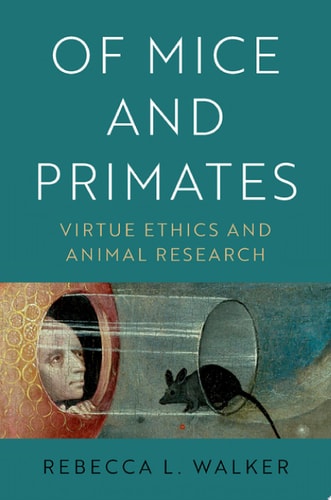
Of Mice and Primates: Virtue Ethics and Animal Research
0
0
As an Amazon Associate and affiliate partner, Menrva Books earns from qualifying purchases. Learn more
Author Description
The ethics of research on animals has historically been viewed through the lens of cost vs benefit, and whether animals have rights. Is the suffering that might be experienced by animals-and the violation of their rights, if they are seen to have any-worth the gain in scientific knowledge? Many experiments that have caused great animal suffering were ethically justified in this way. Rebecca Walker here argues against this paradigm, and advocates instead for a virtue ethics approach. She argues that what is missing from the traditional approach to animal research are issues of character, context, and relationships. What is problematic in much research on animals is less a violation of rights than a lack of care for the vulnerable; and that most philosophical approaches to animal research ignore the actual practice of that research. Different ethical questions thus arise when viewed through this lens, such as: does a researcher who develops relationships with her animal subjects owe them a greater duty of care? What is the moral significance of the psychological effects on the researcher of doing that research? Can, or should, a rhesus monkey, for example, used for research live a good life when it is housed in a research facility?Of Mice and Primates addresses these and other questions by reorienting our moral concern about animal research, and offers a moral theory focused on what actually happens in research settings.
Menrva's Summary
THE THESIS
Can the moral evaluation of animal research be improved by shifting from a rights-based framework to one centered on virtue ethics? Rebecca L. Walker, a scholar in bioethics and philosophy, challenges the traditional cost-benefit analysis that dominates animal research discourse. She argues that current ethical paradigms fail to account for the character of the researcher, the context of the laboratory environment, and the relational dynamics between humans and animals. By applying a virtue ethics framework, Walker proposes a model that prioritizes care, moral sensitivity, and the lived experience of both the researcher and the subject.
THE SCOPE MAP
What You Will Find
- A critique of the traditional rights-based and utilitarian approaches to animal experimentation.
- An application of virtue ethics to the specific context of laboratory research.
- Analysis of the psychological impact of research practices on scientists.
- Exploration of the moral significance of human-animal relationships in clinical settings.
Scope Limits
- The text does not provide a comprehensive legal guide for animal research regulations.
- It does not offer a definitive list of prohibited experiments, focusing instead on the ethical framework of the practice.
THE AUTHORITY PERSPECTIVE
Experts in bioethics frequently cite this work for its unique focus on the character of the researcher rather than just the rights of the subject. Readers often note that the prose is academically rigorous and provides a necessary shift in perspective for those involved in laboratory science.
Page Count:
216
Publication Date:
2025-06-24
Publisher:
Oxford University Press
ISBN-10:
0190089954
ISBN-13:
9780190089955
Philosophy
Politics
Science
Ethics & Morality
Bioethics
Animal Rights
Virtue Ethics
Ethics
Social Philosophy
Community Tags
Similar Books