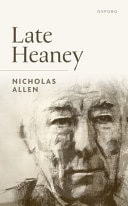
Late Heaney
0
0
As an Amazon Associate and affiliate partner, Menrva Books earns from qualifying purchases. Learn more
Author Description
Late Heaney Follows The Poet Through The Landscapes, Communities And Artists That He Wrote About In His Last Four Collections, The Spirit Level, Electric Light, District And Circle, And Human Chain, Which It Sets In Conversation With Heaney's Work At Large. It Is Set In The Landscapes Of His Work And Begins With A Foreword To Situate Heaney As A Writer And To Introduce Myself As A Reader. There Follows A Chapter On Heaney's Travels From Greece, Where He Learned He Had Been Awarded The Nobel, To Stockholm, Where He Accepted It. This Gives Some Sense Of What This Time Meant For Him, And For His Writing, And Is An Opportunity To Share In His Sense Of Self-reflection As He Looked Back Over His Career And His Life. I Take The Moment Of The Nobel To Be The Beginning Of The Late Phase Because It Is A Clear Point Of Transition In His Writing And In His Life. There Follow Three Chapters On The Places, People And Memories That Shape Heaney's Work In This Final Period. Of These, Landscapes Describes The Places That Heaney Draws And Returns To In His Poems; Bearings Describes The Other Writers And Artists That Heaney Relates To In The Work; And Ghosts Marks The Mournfulness Of The Late Poetry As The Poet Begins To Imagine Himself Among The Shades Of So Many Friends. The Book Closes With A Consideration Of Heaney's Late Work From The Perspective Of The Riverbank, A Place That Features Powerfully In His Final Poems, Resonant As It Is With Images Of Death. For All That, This Is, Surprisingly, A Book Of The Light More Than Dark, Heaney's Poems Dedicated To The Practice Of Illumination-- Provided By Publisher.
Menrva's Summary
THE THESIS
How does the late-career work of Seamus Heaney reflect his evolving relationship with memory, landscape, and mortality? Nicholas Allen, a scholar of Irish literature, examines the final four collections of Seamus Heaney—The Spirit Level, Electric Light, District and Circle, and Human Chain—to identify the thematic shifts occurring after the poet received the Nobel Prize. By situating these poems within the physical and artistic environments that inspired them, Allen argues that Heaney’s later period is defined by a transition toward self-reflection and a preoccupation with the spectral presence of friends and predecessors.
THE SCOPE MAP
What You Will Find
- Analysis of Heaney's final four poetry collections and their thematic continuity.
- Biographical context regarding Heaney's travels, including his Nobel Prize experience.
- Examination of recurring motifs such as the riverbank, ghosts, and landscape.
- Comparative study of Heaney’s engagement with other writers and artists.
THE AUTHORITY PERSPECTIVE
Scholars and readers of Irish poetry value this work for its focused approach to a specific, often overlooked phase of Heaney's career. The text is noted for its accessible prose and its ability to bridge the gap between academic literary criticism and the personal experience of reading poetry.
Page Count:
0
Publication Date:
2026-01-01
Publisher:
New York : Oxford University Press,
ISBN-10:
0198985401
ISBN-13:
9780198985402
Non-Fiction
Biography
Poetry
Literary Criticism
Community Tags
Similar Books