
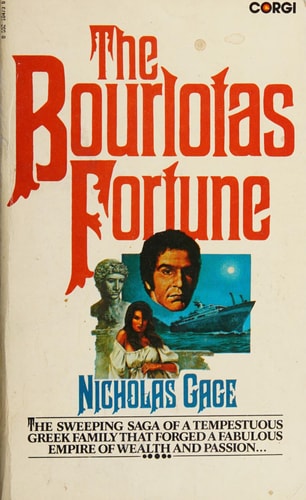
The Bourlotas Fortune
0
0
As an Amazon Associate and affiliate partner, Menrva Books earns from qualifying purchases. Learn more
Author Description
Editorial Review - Kirkus Reviews Money is like good health. You can't have too much of it,"" says Kosmas Bourlotas, Greek shipping magnate and sometime godfather of a clutch of tycoons. When Kosmas loses his fortune, his prestige dips heavily until he makes a killing in Japanese-built oil tankers. This dynastic novel beginning in the small Greek town of Chios in 1820, inevitably develops into today's headlines (reminscent of Livanos, Niarchos and Onassis.) Gage's sense of the shipping world raises it somewhat above lurid melodrama--there's a palpable absence of submachine guns. The whole crew's family feelings run deep, especially about sons, and passing on the business, and the eagle spirit of MONEY. The irony is that the last surviving male heir of the Bourlotas wants to become a celibate monk. But when Kosmas comes down with Hodgkin's Disease, his son gives up his cave on Mount Athos to take over the firm and do well with it until his father recovers--and the son suddenly dies of the same (nonhereditary) illness. God's Hand? Perhaps not--but memorable chicanery without a draggy moment.
Menrva's Summary
THE PULSE
The rise and fall of the Bourlotas shipping empire hinges on the complex relationship between a patriarch and his reluctant heir. Kosmas Bourlotas, a Greek shipping magnate, navigates the volatile waters of international commerce while attempting to secure his legacy across generations. His primary opposition stems from both the cutthroat nature of the global shipping industry and the internal conflict regarding his son's desire for a monastic life. The narrative spans nearly two centuries, utilizing a multi-generational framework to examine the weight of wealth and the persistence of family duty.
INSIDE THE PAGES
- Multi-generational narrative structure spanning from 1820 to the late 20th century
- Detailed depiction of the Greek shipping industry and its global influence
- Exploration of the tension between material ambition and spiritual asceticism
- Character-driven focus on dynastic succession and family loyalty
- Integration of historical context regarding Greek maritime history
- Examination of the psychological impact of terminal illness on business leadership
- Pacing that emphasizes the rapid shifts of fortune in high-stakes commerce
- Realistic portrayal of corporate maneuvering without reliance on sensationalist tropes
THE COLLECTIVE ECHO
Readers and critics often note the author's ability to ground the narrative in the technical realities of the shipping industry, which elevates the work above standard melodrama. Discussion frequently centers on the contrast between the patriarch's obsession with wealth and the son's pursuit of a monastic life on Mount Athos. The pacing is described as brisk, effectively maintaining interest through decades of family history and business dealings. Many highlight the authenticity of the setting, noting that the author avoids common genre clichés in favor of a more grounded exploration of dynastic power. The thematic focus on the legacy of money and the irony of succession remains a primary point of interest for those analyzing the book's structure.
Page Count:
453
Publication Date:
1975-01-01
Publisher:
Holt, Rinehart and Winston
ISBN-10:
0030150965
ISBN-13:
9780030150968
Business
Historical Fiction
Saga
Family Drama
Community Tags
Other Editions(4)


Similar Books