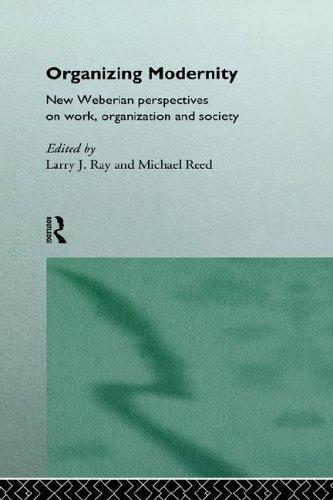
Organizing Modernity
0
0
As an Amazon Associate and affiliate partner, Menrva Books earns from qualifying purchases. Learn more
Author Description
This book provides a reassessment of the significance of Max Weber's work for the current debates about the institutional and organizational dynamics of modernity. It re-evaluates Weber's sociology of bureaucracy and his general account of the trajectory of modernity with reference to the strategic social structures that dominated the emergence and development of modern society. Included here are detailed analyses of contemporary issues such as the collapse of communism, Fordism, corporatism and traditionalism in both Western and Eastern societies. It also signals the potential for new organizational and institutional forms to emerge in the aftermath of these social ruptures and upheavals. All of the contributors are scholars of international repute. They undertake analyses of Weber's texts and his broader intellectual inheritance to reassert the centrality of Weberian sociology for our understanding of the moral, political and organizational dilemmas of late modernity. These analyses challenge orthodox readings of Weber as the prophet of the iron cage. Instead they offer interpretations of his work which emphasize the reality of modernity as a dual process with the potential for both disarticulation of rational structures and deeper colonization of daily life. Not only is this book essential reading for Weber specialists but it also provides compelling analyses of modernity and the inherently contingent nature of global cultural and structural transformation. In these respects the book is required reading for second and third year undergraduates and post-graduates in Sociology and Organizational Studies.
Menrva's Summary
THE THESIS
This book reassesses the enduring relevance of Max Weber's sociological theories to contemporary discussions on the dynamics of modern society. It examines Weber's concepts of bureaucracy and his broader analysis of modernity's trajectory, focusing on the social structures that shaped its emergence and development. The work engages with current issues like the collapse of communism, Fordism, and corporatism, exploring the potential for new organizational forms in the wake of societal ruptures.
THE SCOPE MAP
- Re-evaluation of Max Weber's sociology of bureaucracy.
- Analysis of the strategic social structures in modern society's development.
- Detailed examination of contemporary issues: collapse of communism, Fordism, corporatism, traditionalism.
- Exploration of new organizational and institutional forms post-social ruptures.
- Challenge to orthodox readings of Weber's 'iron cage' concept.
- Interpretations emphasizing modernity as a dual process of rational structure disarticulation and colonization of daily life.
- Reassertion of Weberian sociology's centrality for understanding late modernity's moral, political, and organizational dilemmas.
THE AUTHORITY PERSPECTIVE
This collection of essays by internationally recognized scholars offers a nuanced reinterpretation of Max Weber's work, moving beyond the 'iron cage' paradigm. The contributors analyze Weber's texts and intellectual legacy to underscore his continued importance for understanding the complexities of late modernity. The book is positioned as essential reading for Weber specialists and compelling for students of sociology and organizational studies seeking to grasp the contingent nature of global transformations. Its analyses of contemporary social ruptures and potential new organizational forms provide critical insights into the moral, political, and organizational challenges of our time.
Page Count:
211
Publication Date:
1994-01-01
ISBN-10:
0415089166
Philosophy
Non-Fiction
Business
History
Sociology
Social Theory
Modernity
Community Tags
Similar Books