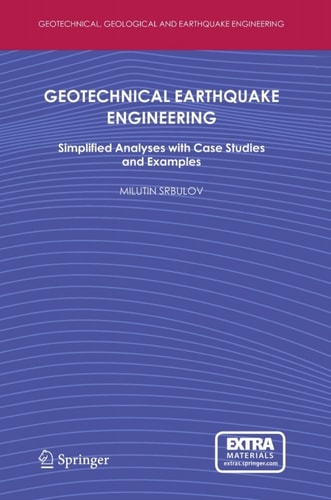
Geotechnical Earthquake Engineering
0
0
As an Amazon Associate and affiliate partner, Menrva Books earns from qualifying purchases. Learn more
Author Description
"Included on the Choice list with the outstanding academic Earth Sciences titles 2008"...This volume describes simplified dynamic analyses that bridge the gap between the rather limited provisions of design codes and the rather eclectic methods used in sophisticated analyses. Graphs and spreadsheets are included for the ease and speed of use of simplified analyses of:soil slope (in)stability and displacements caused by earthquakes,sand liquefaction and flow caused by earthquakes,dynamic soil-foundation interaction,bearing capacity and additional settlement of shallow foundations,earthquake motion effects on tunnels and shafts,frequent liquefaction potential mitigation measures.A number of comments on the assumptions used in different methods, limitation and factors affecting the results are given. Several case histories are also included in the appendices in order to assess the accuracy and usefulness of the simplified methods. AudienceThis work is of interest to geotechnical engineers, engineering geologists, earthquake engineers and students.
Menrva's Summary
THE THESIS
This volume addresses the critical need for simplified dynamic analyses in geotechnical earthquake engineering, bridging the gap between basic design codes and complex analytical methods. The book focuses on providing practical tools for engineers and students to analyze seismic effects on soil structures, foundations, and underground facilities. It details simplified methods for assessing soil slope stability, sand liquefaction, dynamic soil-foundation interaction, bearing capacity, settlement, and earthquake motion effects on tunnels and shafts. The author also discusses mitigation measures for liquefaction and provides commentary on the assumptions, limitations, and influencing factors of these methods, supported by case histories.
THE SCOPE MAP
- Simplified dynamic analyses for soil slope (in)stability and displacements.
- Methods for analyzing sand liquefaction and flow caused by earthquakes.
- Techniques for dynamic soil-foundation interaction.
- Assessment of bearing capacity and settlement of shallow foundations under seismic loads.
- Analysis of earthquake motion effects on tunnels and shafts.
- Discussion of frequent liquefaction potential mitigation measures.
- Inclusion of case histories to validate simplified methods.
THE AUTHORITY PERSPECTIVE
This work was recognized by Choice as an outstanding academic Earth Sciences title in 2008. The book is designed for geotechnical engineers, engineering geologists, earthquake engineers, and students, indicating its intended audience is professionals and academics in the field. Its focus on simplified analyses suggests it aims to be a practical and accessible resource for applying complex theories to real-world problems. The inclusion of graphs and spreadsheets further supports its utility as a hands-on reference for seismic design.
Page Count:
0
Publication Date:
2009-01-01
ISBN-10:
1402086830
ISBN-13:
9781402086830
Science
Non-Fiction
Art
Seismology
Engineering
Earth Sciences
Geology