Russo-Chinese Energy Relations
0
0
As an Amazon Associate and affiliate partner, Menrva Books earns from qualifying purchases. Learn more
Author Description
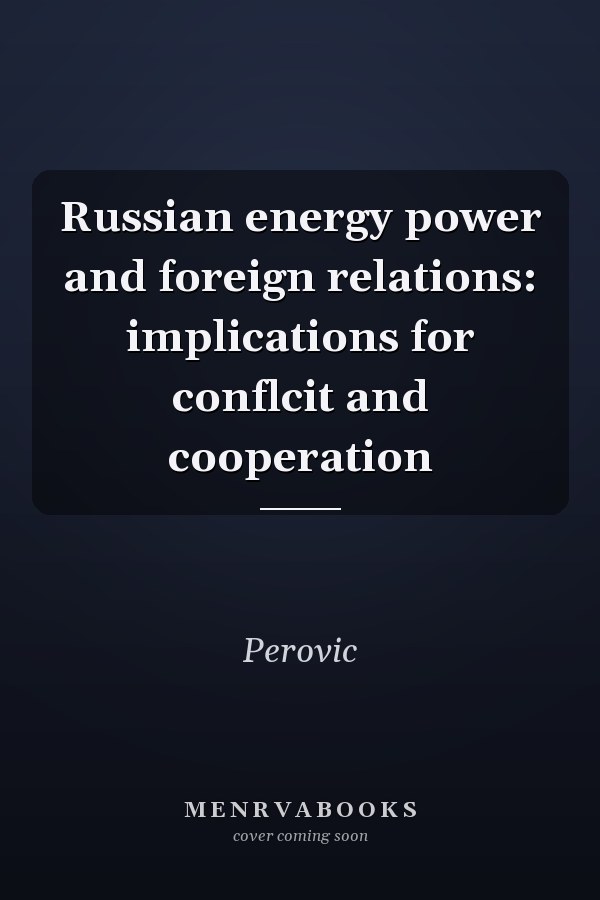
This report makes the point that in both Russia and China it is politics - and not market or commercial considerations - that largely drive energy relationships with each other and the outside world. For both countries, energy and energy security is regarded as a strategic asset and/or objective that are at risk from outside forces. Moreover, both countries are taking a statist - in Russia even patrimonial - approach to energy issues. Therefore cooperation between Russia and China will be difficult even though Russia wants to sell and China wants to buy. The conditions that each state has.
Menrva's Summary
THE THESIS
Politics, not market forces, dictates the energy relationship between Russia and China. This report argues that both nations view energy as a strategic asset, vulnerable to external threats, and approach its management with a statist, and in Russia's case, even patrimonial, mindset. Consequently, despite Russia's desire to sell and China's to buy, genuine cooperation is hindered by these underlying political and security considerations that shape their respective energy policies.
THE SCOPE MAP
- Analysis of the political drivers behind Russo-Chinese energy relations.
- Examination of energy security as a strategic objective for both nations.
- Discussion of the statist and patrimonial approaches to energy policy in Russia and China.
- Assessment of the challenges to cooperation despite mutual interest in trade.
- Exploration of how external forces are perceived to impact energy relationships.
THE AUTHORITY PERSPECTIVE
This report is likely to be regarded as a focused analysis for specialists in international relations and energy policy. Its argument centers on the primacy of political considerations over market dynamics in shaping bilateral energy ties. The work suggests that a deep understanding of each nation's strategic energy objectives and governance approaches is crucial for comprehending the complexities of their relationship. The analysis implies that while trade opportunities exist, political will and security perceptions will ultimately dictate the extent of cooperation.
Page Count:
0
Publication Date:
2006-01-01
ISBN-10:
1905050445
ISBN-13:
9781905050444
Economics
Non-Fiction
Politics
Business
Science
International relations
Geopolitics
Energy policy
Asian Studies
Community Tags
Similar Books