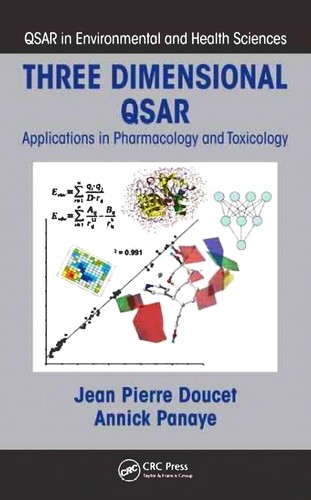
Three-Dimensional QSAR
0
0
As an Amazon Associate and affiliate partner, Menrva Books earns from qualifying purchases. Learn more
Author Description
Experiencing rapid growth over the last 15 years, quantitative structure-activity relationships (QSAR) continue to evolve quickly with an explosion of new tools and techniques. These techniques now play an increasing role in drug design and chemical risk assessment. New molecular descriptors based on three-dimensional structures incorporate a range of classical approaches, including regression and PLS analysis, as well as new nonlinear approaches, such as neural networks and support vector machines. Three-Dimensional QSAR addresses the scope and limitations of different modeling techniques using case studies from pharmacology, toxicology, and ecotoxicology to demonstrate the utility of each technique
Menrva's Summary
THE THESIS
This book investigates the evolving landscape of quantitative structure-activity relationships (QSAR) and their application in drug design and chemical risk assessment. The text explores new molecular descriptors derived from three-dimensional structures, integrating classical regression and PLS analysis with modern nonlinear techniques like neural networks and support vector machines. It aims to delineate the scope and limitations of various modeling approaches. Case studies from pharmacology, toxicology, and ecotoxicology are utilized to illustrate the practical utility of each method.
THE SCOPE MAP
- Coverage of new molecular descriptors based on three-dimensional structures.
- Integration of classical approaches like regression and PLS analysis.
- Exploration of nonlinear approaches including neural networks and support vector machines.
- Demonstration of technique utility through case studies from pharmacology.
- Application of techniques in toxicology case studies.
- Examples from ecotoxicology to showcase modeling approaches.
THE AUTHORITY PERSPECTIVE
The book addresses the rapid growth and evolution of QSAR techniques over the past 15 years, highlighting their increasing importance in drug design and chemical risk assessment. It focuses on the integration of 3D structural information with both traditional and advanced computational methods. The inclusion of case studies from pharmacology, toxicology, and ecotoxicology suggests a practical and applied approach to understanding these complex modeling techniques.
Page Count:
533
Publication Date:
2010-01-01
ISBN-10:
1420091158
ISBN-13:
9781420091151
Non-Fiction
Science
Computational Chemistry
Chemistry
Pharmacology
Toxicology
Community Tags
Similar Books