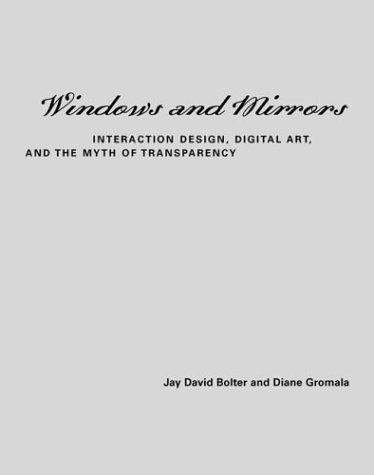
Windows and Mirrors
0
0
As an Amazon Associate and affiliate partner, Menrva Books earns from qualifying purchases. Learn more
Author Description
In Windows and Mirrors: Interaction Design, Digital Art, and the Myth of Transparency, Jay David Bolter and Diane Gromala argues that, contrary to Donald Norman's famous dictum, we do not always want our computers to be invisible "information appliances." They say that a computer does not feel like a toaster or a vacuum cleaner, it feels like a medium that is now taking its place beside other media like printing, film, radio, and television. The computer as medium creates new forms and genres for artists and designers, Bolter and Gromala want to show what digital art has to offer to Web designers, education technologists, graphic artists, interface designers, HCI experts, and, for that matter, anyone interested in the cultural implications of the digital revolution.--BOOK JACKET.
Menrva's Summary
THE THESIS
The digital revolution is reshaping our relationship with technology, challenging the notion that users always desire invisible interfaces. Jay David Bolter and Diane Gromala argue that computers, unlike simple appliances, function as a new medium akin to print, film, radio, and television. This perspective opens up novel forms and genres for digital artists and designers. The book explores the offerings of digital art for a wide range of professionals, including web designers, educators, graphic artists, interface designers, and HCI experts, examining the broader cultural consequences of this digital transformation.
THE SCOPE MAP
- Explores the concept of computers as a new medium, distinct from traditional appliances.
- Analyzes the implications of digital art for various design and technology fields.
- Challenges Donald Norman's concept of 'invisible information appliances'.
- Discusses the cultural impact of the digital revolution on media and design.
- Identifies new forms and genres emerging from computer-based media.
- Targets professionals in web design, education technology, graphic arts, interface design, and HCI.
THE AUTHORITY PERSPECTIVE
The book positions itself as a critical examination of human-computer interaction and digital media, challenging established theories and highlighting the creative potential of digital technologies. It aims to bridge the gap between theoretical discussions of digital art and practical applications in design and technology fields. The authors' argument suggests a focus on the computer as a cultural force, influencing artistic expression and user experience. This perspective likely appeals to academics and practitioners interested in the evolving landscape of digital culture and design.
Page Count:
194
Publication Date:
2003-01-01
ISBN-10:
0262025450
ISBN-13:
9780262025454
Science & Technology
Non-Fiction
Action
Art
Media Studies
Design Theory
Digital art
Community Tags
Similar Books