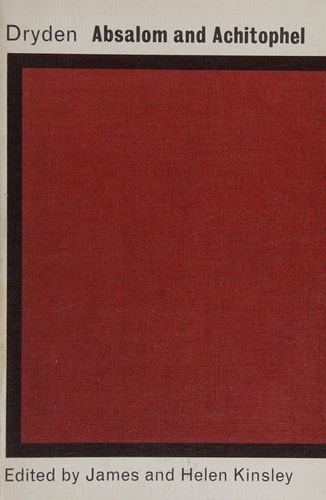
Absalom and Achitophel
0
0
As an Amazon Associate and affiliate partner, Menrva Books earns from qualifying purchases. Learn more
Author Description
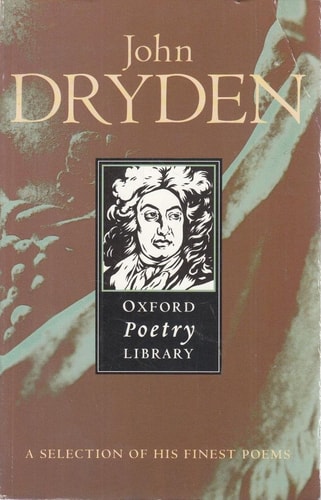
ReviewVerse satire by John Dryden published in 1681. The poem, which is written in heroic couplets, is about a contemporary episode in which anti-Catholics, notably the Earl of Shaftesbury, sought to bar James, Duke of York, a Roman Catholic convert and brother to King Charles II, from the line of succession in favor of the king's illegitimate (but Protestant) son, the Duke of Monmouth. Dryden based his work on an Old Testament incident recorded in II Samuel 13-19; these chapters relate the story of King David's favorite son Absalom and his false friend Achitophel (Ahithophel), who persuades Absalom to revolt against his father. In his poem, Dryden assigns each figure in the crisis a biblical name, e.g., Absalom (Monmouth), Achitophel (Shaftesbury), and David (Charles II). Despite the strong anti-Catholic tenor of the times, Dryden's clear and persuasive dissection of the intriguers' motives helped to preserve the Duke of York's position. A second part of the poem, largely composed by Nahum Tate but containing 200 lines by Dryden that were directed at his literary rivals Thomas Shadwell and Elkanah Settle, was published in 1682.
Menrva's Summary
THE PULSE
The poem centers on the political crisis surrounding the succession of the English throne, using biblical allegory to expose the machinations of those attempting to bypass the rightful heir. Dryden employs the narrative framework of an Old Testament rebellion to mirror the contemporary conflict between King Charles II and the Earl of Shaftesbury. The protagonist, representing the King, must navigate the treacherous influence of his illegitimate son and the manipulative advisors seeking to destabilize the monarchy. The work operates within the rigid constraints of heroic couplets, utilizing elevated language to dissect the motives of political figures while maintaining a sharp, satirical edge.
INSIDE THE PAGES
- Utilization of heroic couplets as the primary structural device
- Extensive use of biblical allegory to represent 17th-century political figures
- Satirical character portraits of contemporary historical actors
- Direct commentary on the Exclusion Crisis and the line of succession
- Integration of classical rhetorical techniques to persuade the reader
- Sharp critique of political opportunism and religious factionalism
- Inclusion of specific literary rivalries within the second part of the work
- Precise, measured verse that balances narrative clarity with complex political argument
THE COLLECTIVE ECHO
Readers and critics frequently highlight the technical precision of Dryden's verse and his ability to render complex political maneuvering into accessible, biting satire. Discussion often centers on the effectiveness of the biblical allegory as a tool for political commentary, noting how it elevates a specific historical moment into a broader reflection on power and betrayal. Scholars often point to the poem as a foundational example of English political satire, emphasizing the balance between character development and polemical intent. The work is widely recognized for its influence on the development of the heroic couplet in English poetry, with many readers appreciating the clarity and force of the author's arguments.
Page Count:
65
Publication Date:
1966-01-01
Publisher:
Oxford University Press
ISBN-10:
0199110093
ISBN-13:
9780199110094
Poetry
Satire
Great Britain
Classical
Political
British literature
Community Tags
Other Editions(5)


Similar Books


Reader Comments
Share Your Thoughts
No comments yet. Be the first to share your thoughts!