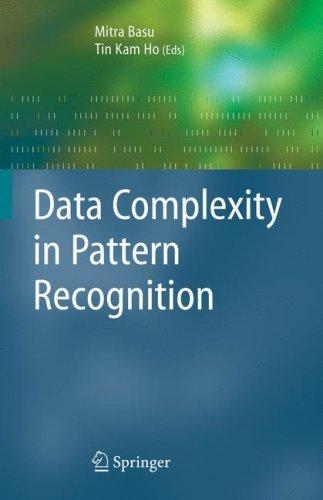
Data Complexity in Pattern Recognition
0
0
As an Amazon Associate and affiliate partner, Menrva Books earns from qualifying purchases. Learn more
Author Description
Machines capable of automatic pattern recognition have many fascinating uses in science and engineering as well as in our daily lives. Algorithms for supervised classification, where one infers a decision boundary from a set of training examples, are at the core of this capability. Tremendous progress has been made in refining such algorithms; yet, automatic learning in many simple tasks in daily life still appears to be far from reach. This book takes a close view of data complexity and its role in shaping the theories and techniques in different disciplines and asks: • What is missing from current classification techniques? • When the automatic classifiers are not perfect, is it a deficiency of the algorithms by design, or is it a difficulty intrinsic to the classification task? • How do we know whether we have exploited to the fullest extent the knowledge embedded in the training data? Data Complexity in Pattern Recognition is unique in its comprehensive coverage and multidisciplinary approach from various methodological and practical perspectives. Researchers and practitioners alike will find this book an insightful reference to learn about the current status of available techniques as well as application areas.
Menrva's Summary
THE THESIS
This book investigates the fundamental role of data complexity in the limitations of current pattern recognition and classification techniques. The author, Mitra Basu, explores why machines capable of automatic pattern recognition, despite significant advancements in supervised classification algorithms, still struggle with seemingly simple tasks. The book delves into questions about the deficiencies in algorithm design versus intrinsic task difficulty, and how to ascertain if training data has been fully utilized, offering a multidisciplinary perspective for researchers and practitioners.
THE SCOPE MAP
- What is missing from current classification techniques?
- Is imperfect classification a deficiency of algorithms or intrinsic task difficulty?
- How to determine if training data knowledge has been fully exploited.
- Comprehensive coverage of data complexity in pattern recognition.
- Multidisciplinary approach from various methodological and practical perspectives.
- Insightful reference for researchers and practitioners.
- Discussion of algorithms for supervised classification.
THE AUTHORITY PERSPECTIVE
The book is presented as a unique and comprehensive reference for researchers and practitioners in pattern recognition and related fields. Its multidisciplinary approach aims to provide insights into the current status of available techniques and application areas. The focus on data complexity suggests a text that will challenge existing assumptions and encourage deeper investigation into the limitations of automatic learning. It is positioned as a valuable resource for understanding the theoretical and practical aspects of classification tasks.
Page Count:
300
Publication Date:
2006-01-01
ISBN-10:
1846281717
ISBN-13:
9781846281716
Non-Fiction
Art
Science
Engineering
Machine Learning
Data Science
Computer Science
Community Tags
Similar Books