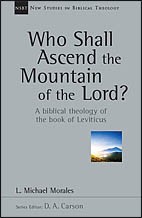
Who Shall Ascend the Mountain of the Lord?
0
0
As an Amazon Associate and affiliate partner, Menrva Books earns from qualifying purchases. Learn more
Author Description
"Who shall ascend the mountain of the LORD?" ―Psalm 24:3 In many ways, this is the fundamental question of Old Testament Israel's cult―and, indeed, of life itself. How can creatures made from dust become members of God's household "forever"? The question of ascending God's mountain to his house was likely recited by pilgrims on approaching the temple on Mount Zion during the annual festivals. This entrance liturgy runs as an undercurrent throughout the Pentateuch and is at the heart of its central book, Leviticus. Its dominating concern, as well as that of the rest of the Bible, is the way in which humanity may come to dwell with God. Israel's deepest hope was not merely a liturgical question, but a historical quest. Under the Mosaic covenant, the way opened up by God was through the Levitical cult of the tabernacle and later temple, its priesthood and rituals. The advent of Christ would open up a new and living way into the house of God―indeed, that was the goal of his taking our humanity upon himself, his suffering, his resurrection and ascension. In this stimulating volume in the New Studies in Biblical Theology, Michael Morales explores the narrative context, literary structure and theology of Leviticus. He follows its dramatic movement, examines the tabernacle cult and the Day of Atonement, and tracks the development from Sinai?s tabernacle to Zion's temple―and from the earthly to the heavenly Mount Zion in the New Testament. He shows how life with God in the house of God was the original goal of the creation of the cosmos, and became the goal of redemption and the new creation. Addressing key issues in biblical theology, the works comprising New Studies in Biblical Theology are creative attempts to help Christians better understand their Bibles. The NSBT series is edited by D. A. Carson, aiming to simultaneously instruct and to edify, to interact with current scholarship and to point the way ahead.
Menrva's Summary
THE THESIS
This volume investigates the fundamental question of how humanity can dwell with God, exploring the Levitical cult as the Old Testament's answer and tracing its development through to the New Testament. Michael Morales, an established biblical theologian, examines the narrative context, literary structure, and theology of Leviticus, focusing on its entrance liturgy and the concept of ascending God's mountain. The book follows the movement from the Sinai tabernacle to the Zion temple, and ultimately to the heavenly Mount Zion, arguing that life with God was the original goal of creation and the ultimate aim of redemption.
THE SCOPE MAP
- Exploration of the question "Who shall ascend the mountain of the LORD?" as central to Old Testament Israel's cult.
- Analysis of the Levitical cult, priesthood, and rituals as the Mosaic covenant's pathway to dwelling with God.
- Examination of the tabernacle cult and the Day of Atonement.
- Tracing the development from Sinai's tabernacle to Zion's temple.
- Discussion of the New Testament's perspective on Christ opening a new and living way into God's house.
- Argument that life with God in His house was the original goal of creation and the goal of redemption and new creation.
- Contextualization within the 'New Studies in Biblical Theology' series, edited by D. A. Carson.
THE AUTHORITY PERSPECTIVE
This volume is presented as a stimulating contribution to biblical theology, aiming to instruct and edify Christians in their understanding of the Bible. The 'New Studies in Biblical Theology' series, to which this book belongs, is known for its creative attempts to engage with current scholarship and point toward future directions in the field. The book's focus on Leviticus and its theological implications suggests a scholarly yet accessible approach for readers interested in the Old Testament's foundational texts and their connection to Christian doctrine. The author's exploration of themes like creation, redemption, and the divine-human relationship positions it as a text that seeks to deepen theological understanding.
Page Count:
320
Publication Date:
2015-01-01
ISBN-10:
0830826386
ISBN-13:
9780830826384
History
Religion
Non-Fiction
New Testament
Old Testament
Redemption
Creation
Community Tags
Similar Books