Messianic Hope
0
0
As an Amazon Associate and affiliate partner, Menrva Books earns from qualifying purchases. Learn more
Author Description
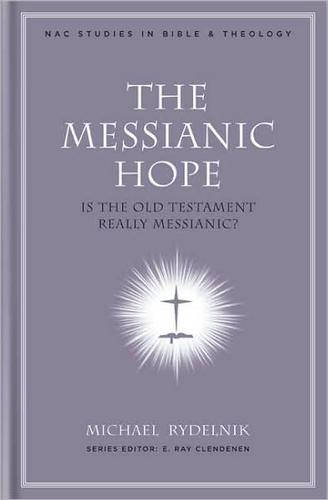
In The Messianic Hope, Jewish Studies professor Michael Rydelnik argues against the view (growing even among evangelicals) that Old Testament texts historically interpreted as direct prophecies of the Messiah were not really Messianic in their original intent. "The Messianic hope" is widely thought to be merely a postexilic scriptural phenomenon, and some say the apostles engaged in what one writer called "a creative exegetical enterprise." But without direct Messianic prophecy in the Old Testament, one of the essential arrows that Jesus and the apostles (as well as the later church) used to defend the messiahship of Jesus is removed from the quiver of contemporary Jewish missions. Furthermore, many New Testament texts are drained of significance that see Jesus as perfectly fitting a mold that the Old Testament writers built text by text. As Jesus told the Jewish leaders, for example, Moses "wrote of me" (John 5:46). Another volume in the New American Commentary Studies in Bible & Theology series, an extension of the long-respected New American Commentary series.
Menrva's Summary
THE THESIS
The Messianic Hope investigates the historical and theological validity of Old Testament prophecies as direct predictions of the Messiah. Professor Michael Rydelnik challenges the prevailing view that Old Testament texts, often interpreted as Messianic prophecies, were not originally intended as such. He argues that this perspective, particularly prevalent in postexilic interpretations and some modern evangelical thought, undermines a crucial element in defending Jesus' messiahship to Jewish audiences and diminishes the significance of New Testament passages that link Jesus to Old Testament prophecies. The book aims to re-establish the direct Messianic intent of these ancient texts.
THE SCOPE MAP
- Analysis of Old Testament texts traditionally interpreted as Messianic prophecies.
- Critique of the view that Messianic interpretation is solely a postexilic phenomenon.
- Examination of the 'creative exegetical enterprise' argument regarding New Testament authors.
- Discussion of the implications for Jewish missions and apologetics.
- Exploration of how New Testament texts fulfill Old Testament prophecies concerning Jesus.
- Connection to the New American Commentary Studies in Bible & Theology series.
THE AUTHORITY PERSPECTIVE
The book is presented as a scholarly work within the New American Commentary Studies in Bible & Theology series, extending the respected New American Commentary line. Its focus on defending the Messianic interpretation of Old Testament texts suggests it is aimed at theological students, pastors, and scholars interested in biblical interpretation and Jewish-Christian dialogue. The premise addresses a significant debate within evangelical and Jewish studies concerning the original intent of prophetic passages.
Page Count:
304
Publication Date:
2010-01-01
ISBN-10:
0805446540
ISBN-13:
9780805446548
Non-Fiction
Religion
Theology
New Testament
Jewish Studies
Old Testament
Messianism
Community Tags
Similar Books