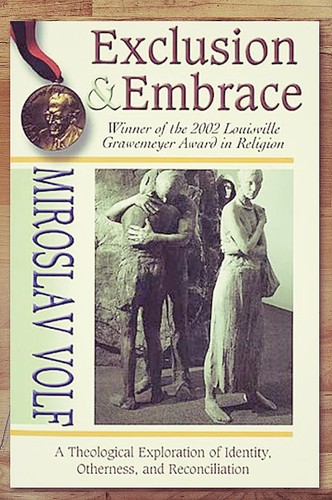
Exclusion and Embrace
0
0
As an Amazon Associate and affiliate partner, Menrva Books earns from qualifying purchases. Learn more
Author Description
Exclusion and Embrace grew out of a predicament, out of an attempt at making sense of the war that was raging in the former Yugoslavia. But to Miroslav Volf it soon became a larger issue of trying to address the question concerning various sorts of conflicts around the problem of identity. Life at the end of the twentieth century presents us with a disturbing reality. Otherness, the simple fact of being different in some way, has come to be defined as in and of itself evil. Miroslav Volf contends that if the healing word of the gospel is to be heard today, Christian theology must find ways of speaking that address the hatred of the other. Volf was startled by the realization of how the basic categories of liberation theology functioned, and so sought to explore alternative ways of thinking about the relationship of the Christian faith to the world of conflict. That's how the idea of embrace came to Volf's mind. Reaching back to the New Testament metaphor of salvation as reconciliation, Volf proposes the idea of embrace as a theological response to the problem of exclusion. - Publisher.
Menrva's Summary
THE THESIS
This book investigates how Christian theology can address the contemporary problem of exclusion driven by identity conflicts. Miroslav Volf, prompted by the war in the former Yugoslavia, explores the pervasive notion that 'otherness' is inherently evil. He critically examines the categories of liberation theology and proposes 'embrace' as a theological response, drawing on the New Testament concept of reconciliation to counter societal exclusion.
THE SCOPE MAP
- Analysis of the roots of exclusion and hatred of the 'other' in contemporary society.
- Exploration of the relationship between Christian faith and global conflict.
- Critique of existing theological frameworks, particularly liberation theology.
- Proposal of 'embrace' as a theological concept for reconciliation.
- Examination of the New Testament metaphor of salvation as reconciliation.
- Discussion of identity as a source of conflict and exclusion.
THE AUTHORITY PERSPECTIVE
The book is recognized for its profound engagement with theological and social issues, particularly in the context of post-war reconciliation. Volf's work is noted for its attempt to bridge theological discourse with the realities of identity-based conflicts and the pervasive fear of difference. The concept of 'embrace' is presented as a central theological response to the problem of exclusion. The book's origins in the conflicts of the former Yugoslavia lend it a significant historical and ethical weight.
Page Count:
336
Publication Date:
2010-01-01
ISBN-10:
1426712332
ISBN-13:
9781426712333
Philosophy
Religion
Non-Fiction
Social Issues
Theology
Christianity
Community Tags
Similar Books