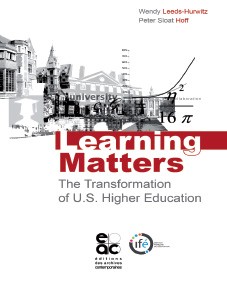
Learning Matters
0
0
As an Amazon Associate and affiliate partner, Menrva Books earns from qualifying purchases. Learn more
Author Description
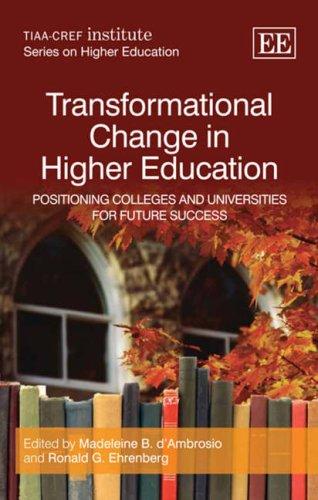
Higher education in the United States of America, considered by many to set a worldwide standard for broad access and high levels of excellence, has for many decades seen massive changes in its approaches to teaching and learning. Redesigning and transforming the way colleges and universities teach their students has been likened to reconstructing an airplane while it remains aloft. More than 4,000 US colleges and universities have met the challenge by analyzing major changes in student populations and introducing new instructional techniques that recognize the primacy of learning over teaching. This seemingly innocent but powerful transformation, acknowledging that teaching only matters as a means to the real end - learning - is powering a pedagogical revolution. The Learning Revolution in US higher education began when World War II veterans flooded university classrooms, soon to be followed by their children, the American «Baby Boom.» Overwhelming numbers of new students from new kinds of backgrounds flooded colleges and universities, forcing professors to rethink how they went about teaching these new generations. To handle the numbers, many new universities were created, and many established centers for teaching excellence to help professors adapt to new populations with new techniques. In the 1990s, higher education further professionalized the teaching craft via the Scholarship of Teaching and Learning. Research into how students learn and how to help them learn took its place alongside traditional academic research. Aided by a wave of new technologies, teaching centers and the scholarship of teaching and learning are transforming the university classroom as well as many new venues outside the classroom where learning now takes place. The resulting new pedagogical architecture now embraces every dimension of US higher education.
Menrva's Summary
THE THESIS
The transformation of American higher education is driven by a fundamental shift from prioritizing teaching to prioritizing learning. This book examines the historical evolution of pedagogical approaches in US colleges and universities, detailing how massive changes in student populations since World War II, particularly the influx of veterans and the Baby Boom generation, necessitated new instructional techniques. It highlights the establishment of teaching centers and the rise of the Scholarship of Teaching and Learning in the 1990s as key developments in professionalizing teaching and focusing on how students learn. The narrative traces how technology and these new approaches have reshaped the university classroom and beyond, creating a new pedagogical architecture for higher education.
THE SCOPE MAP
- Historical analysis of pedagogical changes in US higher education from post-WWII to the 1990s.
- Examination of the impact of changing student demographics on teaching and learning.
- Discussion of the role of universities in adapting to new student populations and instructional techniques.
- Exploration of the Scholarship of Teaching and Learning (SoTL) as a professionalizing force.
- The influence of new technologies on classroom and off-campus learning environments.
- Analysis of the resulting 'pedagogical revolution' and its architecture.
THE AUTHORITY PERSPECTIVE
The book frames the evolution of US higher education as a 'learning revolution,' emphasizing the shift from teaching-centric to learning-centric models. It details the historical catalysts, such as the post-war influx of students and the subsequent professionalization through the Scholarship of Teaching and Learning. The narrative suggests that this transformation, aided by technology, has fundamentally altered the educational landscape. The approach appears to be an analytical overview of institutional and pedagogical change.
Page Count:
309
Publication Date:
2012-01-01
ISBN-10:
2813000876
ISBN-13:
9782813000873
Business
History
Non-Fiction
Pedagogy
Teaching Methods
Higher Education
Educational Reform
Community Tags
Similar Books