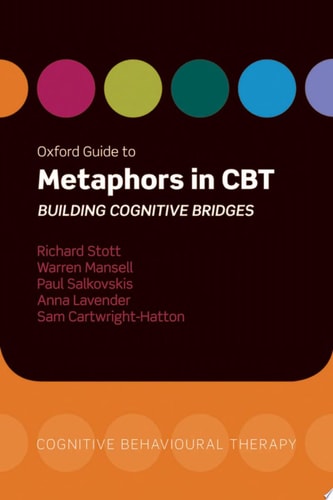
Oxford Guide to Metaphors in CBT: Building Cognitive Bridges
0
0
As an Amazon Associate and affiliate partner, Menrva Books earns from qualifying purchases. Learn more
Author Description
The business of cognitive therapy is to transform meanings. What better way to achieve this than through a metaphor? Metaphors straddle two different domains at once, providing a conceptual bridge from a problematic interpretation to a fresh new perspective that can cast one's experiences in a new light. Even the simplest metaphor can be used again and again with different clients, yet still achieve the desired effect. One such example is the 'broken leg' metaphor for depression. Clients with depression are understandably frustrated with their symptoms. They may often push themselves to get better or tell themselves that they should be better by now. As a therapist, it is fair to ask, would the client be so harsh and demanding on herself after getting a broken leg? A broken leg needs time to heal and you need to begin to walk on it gradually as it builds up in strength. "You can't run before you can walk", and if you try, you are likely to make it worse. For many clients this simple metaphor is enlightening, changing their view of their symptoms as a sign of their own laziness and worthlessness, to a view of them as part of an understandable illness, that while open to improvement, cannot get better over night.This book is the first to show just how metaphors can be used productively in CBT as an integral part of the treatment. It describes the use of metaphors for a wide range of problems, including anxiety and depression, and provides countless examples of metaphors that have been used by others in CBT. It brings together in one place hundreds of metaphors that experienced therapists have used to great success. It will be a valuable sourcebook for all cognitive behaviour therapists, as well as those training in CBT.
Menrva's Summary
THE THESIS
How can therapists effectively utilize metaphors to bridge the gap between a patient's problematic interpretations and healthier cognitive perspectives? Richard Stott, an experienced practitioner, argues that metaphors serve as essential clinical tools for transforming meaning within the framework of Cognitive Behavioral Therapy (CBT). By drawing on a vast collection of metaphors used by seasoned clinicians, the text provides a structured methodology for integrating these conceptual bridges into standard treatment protocols for various psychological conditions.
THE SCOPE MAP
What You Will Find
- A comprehensive collection of hundreds of metaphors categorized for clinical application.
- Practical guidance on using metaphors to address specific conditions like anxiety and depression.
- Theoretical frameworks explaining why metaphors function as effective cognitive restructuring tools.
- Case-based examples demonstrating how to introduce and adapt metaphors during therapy sessions.
THE AUTHORITY PERSPECTIVE
Clinicians and trainees frequently identify this text as a foundational resource for expanding their therapeutic toolkit. Experts highlight the book's practical utility in simplifying complex cognitive concepts for clients through accessible, illustrative language.
Page Count:
249
Publication Date:
2010-07-01
Publisher:
Oxford University Press, USA
ISBN-10:
0199207496
ISBN-13:
9780199207497
Psychology
Self Help
Mental Health
Metaphor
Community Tags
Similar Books