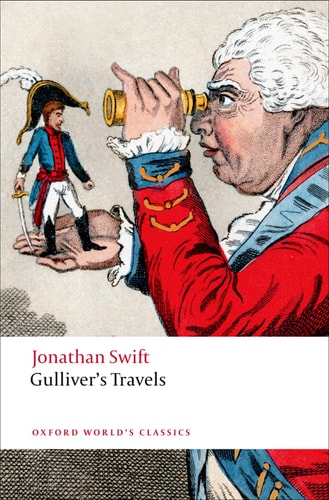
Gulliver's Travels
0
0
As an Amazon Associate and affiliate partner, Menrva Books earns from qualifying purchases. Learn more
Author Description
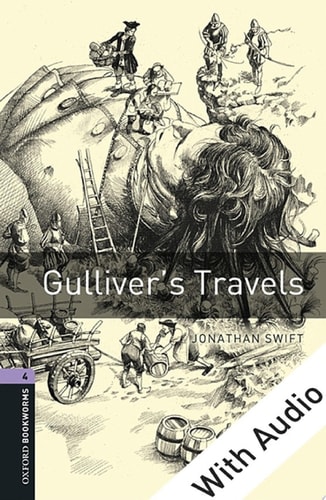
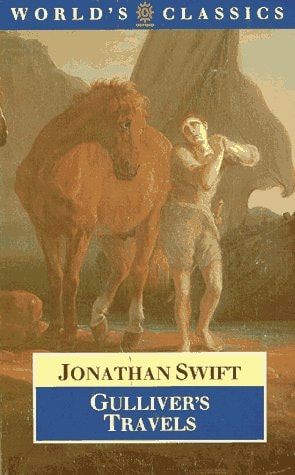
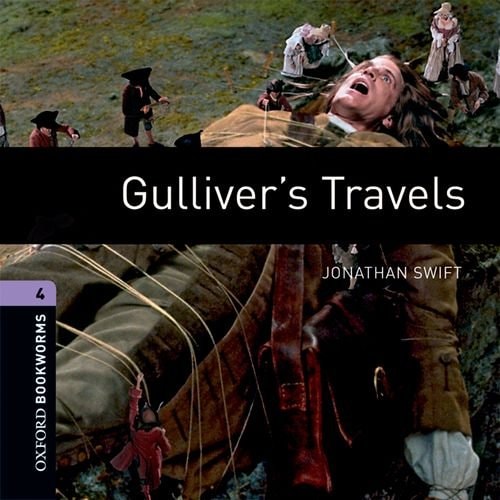
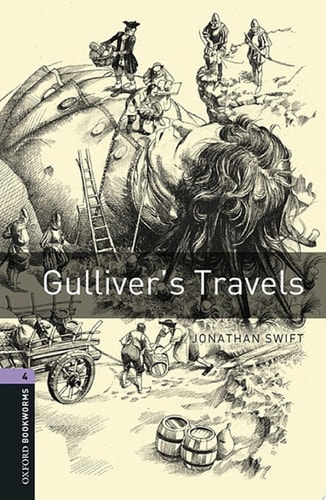
A parody of traveler’s tales and a satire of human nature, “Gulliver’s Travels” is Jonathan Swift’s most famous work which was first published in 1726. An immensely popular tale ever since its original publication, “Gulliver’s Travels” is the story of its titular character, Lemuel Gulliver, a man who loves to travel. A series of four journeys are detailed in which Gulliver finds himself in a number of amusing and precarious situations. In the first voyage, Gulliver is imprisoned by a race of tiny people, the Lilliputians, when following a shipwreck he is washed upon the shores of their island country. In his second voyage Gulliver finds himself abandoned in Brobdingnag, a land of giants, where he is exhibited for their amusement. In his third voyage, Gulliver once again finds himself marooned; fortunately he is rescued by the flying island of Laputa, a kingdom devoted to the arts of music and mathematics. He subsequently travels to the surrounding lands of Balnibarbi, Luggnagg, Glubbdubdrib, and Japan. Finally in his last voyage, when he is set adrift by a mutinous crew, he finds himself in the curious Country of the Houyhnhnms. Through the various experiences of Gulliver, Swift brilliantly satirizes the political and cultural environment of his time in addition to creating a lasting and enchanting tale of fantasy. This edition is illustrated by Milo Winter and includes an introduction by George R. Dennis.
Menrva's Summary
THE PULSE
Lemuel Gulliver, a ship surgeon with a penchant for travel, finds his life upended by a series of shipwrecks and mutinies that strand him in increasingly bizarre and isolated lands. Gulliver serves as the observer and protagonist, navigating worlds that function as distorted mirrors of 18th-century European society. His objective is simple survival and eventual return to England, yet he is constantly thwarted by the physical constraints of his environment—ranging from the microscopic scale of Lilliput to the towering giants of Brobdingnag. The narrative is presented as a first-person travelogue, utilizing a dry, clinical tone to document the absurdities of the cultures he encounters.
INSIDE THE PAGES
- First-person travelogue narrative structure
- Satirical critique of 18th-century political institutions
- Use of scale and perspective to highlight human vanity
- Allegorical representation of societal flaws
- Episodic plot progression across four distinct voyages
- Philosophical inquiry into the nature of humanity
- Contrast between rational and irrational societies
- Detailed world-building through pseudo-scientific observation
THE COLLECTIVE ECHO
Readers and critics frequently highlight the work as a foundational text in the tradition of English satire. Discussion often centers on the shift in tone from the whimsical adventures of the early chapters to the biting misanthropy found in the final voyage. Many observers note that while the book is often presented as a fantasy adventure, its primary function is to dismantle the pretensions of contemporary government and science. The effectiveness of the world-building remains a frequent topic of analysis, as the distinct physical laws of each island serve to amplify the thematic focus on human folly. Scholars continue to debate the extent to which Gulliver’s eventual disillusionment reflects Swift’s own perspective on the human condition.
Page Count:
0
Publication Date:
2006-01-01
Publisher:
Oxford University Press
ISBN-10:
0199209790
ISBN-13:
9780199209798
Fantasy
Adventure
Satire
Political fiction
classic
Community Tags
Similar Books