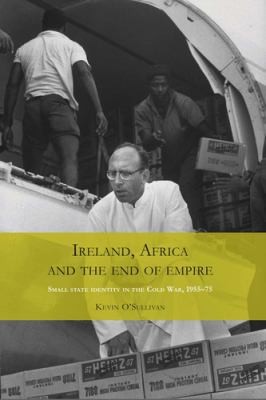
Ireland, Africa and the End of Empire: Small State Identity in the Cold War, 1955-75
0
0
As an Amazon Associate and affiliate partner, Menrva Books earns from qualifying purchases. Learn more
Author Description
In the twenty years after Ireland joined the UN in 1955, one subject dominated its fortunes: Africa. The first detailed study of Ireland's relationship with that continent, this book documents its special place in Irish history. Adopting a highly original, and strongly comparative approach, it shows how small and middling powers like Ireland, Canada, the Netherlands and the Nordic states used Africa to shape their position in the international system, and how their influence waned with the rise of the Afro-Asian bloc. O'Sullivan chronicles Africa's impact on Irish foreign policy; the link between African decolonisation and Irish post-colonial identity; and the missionaries, aid workers, diplomats, peacekeepers, and anti-apartheid protesters at the heart of Irish popular understanding of the developing world. Offering a fascinating account of small state diplomacy, and a unique perspective on African decolonisation, this book provides essential insight for scholars of Irish history, African history, international relations, and the history of NGOs, as well as anyone interested in Africa's important place in the Irish public imagination.--Publisher's website.
Menrva's Summary
THE THESIS
This book investigates how Ireland, as a small state during the Cold War, utilized its engagement with Africa to define its international identity and influence. It examines the period from 1955 to 1975, detailing how Ireland, alongside other small and middling powers like Canada, the Netherlands, and Nordic states, leveraged its involvement in Africa to shape its position on the global stage. The study highlights the diminishing influence of these states as the Afro-Asian bloc gained prominence. O'Sullivan explores the profound impact of Africa on Irish foreign policy, the connection between African decolonization and Ireland's post-colonial self-perception, and the significant role of missionaries, aid workers, diplomats, peacekeepers, and anti-apartheid activists in shaping public understanding of the developing world.
THE SCOPE MAP
- Ireland's relationship with Africa from 1955-1975, focusing on its role in shaping Irish foreign policy and post-colonial identity.
- A comparative analysis of how small and middling powers (Ireland, Canada, Netherlands, Nordic states) used Africa to define their international standing.
- The influence of the rise of the Afro-Asian bloc on the diplomatic leverage of smaller nations.
- The impact of African decolonization on Irish identity and international engagement.
- The roles of Irish missionaries, aid workers, diplomats, peacekeepers, and anti-apartheid protesters in shaping public perception.
- An examination of small state diplomacy during the Cold War.
- A unique perspective on African decolonization through the lens of Irish engagement.
THE AUTHORITY PERSPECTIVE
The book is presented as the first detailed study of Ireland's relationship with Africa, offering an original and comparative approach to understanding small state diplomacy during the Cold War. It is positioned as essential reading for scholars of Irish history, African history, international relations, and the history of NGOs, as well as for those interested in the public perception of Africa in Ireland. The publisher's website emphasizes its unique perspective on African decolonization and its contribution to understanding the role of small states in the international system.
Page Count:
230
Publication Date:
2013-01-01
ISBN-10:
0719086027
ISBN-13:
9780719086021
History
Politics
Non-Fiction
Diplomacy
International relations
Irish History
African history
Community Tags
Similar Books