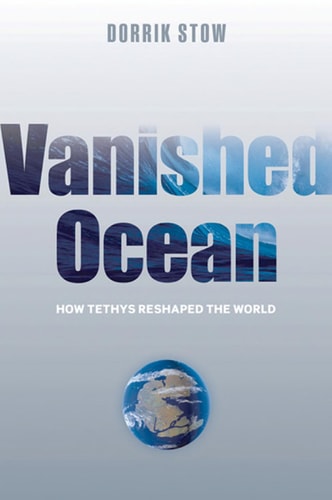
Vanished Ocean: How Tethys Reshaped the World
0
0
As an Amazon Associate and affiliate partner, Menrva Books earns from qualifying purchases. Learn more
Author Description
Six million years ago, a vast ocean--which scientists have named Tethys--vanished from the face of the earth. How could such a huge body of water simply disappear? More interesting, how is it possible for scientists to know with certainty that Tethys existed for a quarter of a billion years, a period that includes the entire "Age of Dinosaurs" and almost all of the "Age of Mammals," right up to the point when our distant ancestors began to walk upright.Vanished Ocean tells the fascinating story of Tethys, offering an illuminating account of the scientific evidence for the ocean's existence. Renowned geologist Dorrik Stow describes the powerful forces that shaped the ocean; the marine life it once held and the rich deposits of oil that life left behind; and the impact of its currents on environment and climate. The story of Tethys is also a story of extinctions, floods, and extraordinary episodes such as the virtual drying up of the Mediterranean, before being filled again by a dramatic cascade of water over the straits of Gibraltar. In telling this story, Stow reveals how geologists and oceanographers have spent years proving the former existence of Tethys, from a remarkable series of clues locked away in rocks now exposed high up in mountain ranges and buried in sediments deep beneath today's oceans. Indeed, these myriad clues are now scattered from Morocco to China and from the depths of the Caspian Sea to the highest Himalayan peaks.Here then is the gripping story of the merging and splintering of continents, the rise and fall of mountain ranges, and an ancient, vast ocean that simply vanished from sight. It is a story that reminds us of the profound impact of oceans and their currents on the environment, climate, and life of our planet.
Menrva's Summary
THE THESIS
This book investigates the geological history and eventual disappearance of the Tethys Ocean, a massive body of water that existed for over 250 million years. Author Dorrik Stow, a distinguished geologist, utilizes evidence from rock formations, sediment deposits, and tectonic plate movements to reconstruct the life cycle of this ancient ocean. He argues that understanding the Tethys is critical to comprehending the evolution of modern continents, climate patterns, and the distribution of natural resources like oil.
THE SCOPE MAP
What You Will Find
- Geological evidence from mountain ranges and deep-sea sediment cores.
- Analysis of tectonic plate interactions and continental drift.
- Examination of marine life fossils and their role in oil formation.
- Historical climate data and the impact of ancient ocean currents.
THE AUTHORITY PERSPECTIVE
Experts and readers alike recognize this text as an accessible yet scientifically rigorous account of paleoceanography. The prose is noted for its ability to translate complex geological data into a coherent narrative for both students and interested laypeople.
Page Count:
288
Publication Date:
2010-06-10
Publisher:
Oxford University Press
ISBN-10:
019921428X
ISBN-13:
9780199214280
Science
Natural History
Marine Ecology
Ocean
Earth Sciences
Curiosities & Wonders
Geology
Oceanography
Earth Science
Community Tags
Similar Books