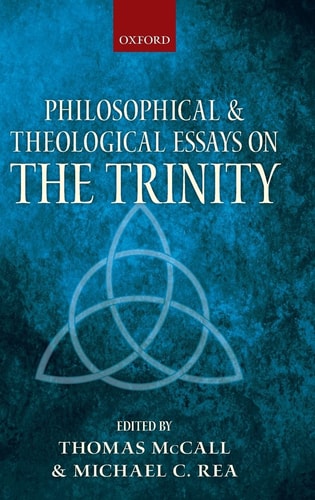
Philosophical and Theological Essays on the Trinity
0
0
As an Amazon Associate and affiliate partner, Menrva Books earns from qualifying purchases. Learn more
Author Description
Classical Christian orthodoxy insists that God is Triune: there is only one God, but there are three divine Persons - Father, Son, and Holy Spirit - who are somehow of one substance with one another. But what does this doctrine mean? How can we coherently believe that there is only one God if we also believe that there are three divine Persons? This problem, sometimes called the 'threeness-oneness problem' or the 'logical problem of the Trinity', is the focus of this interdisciplinary volume.Philosophical and Theological Essays on the Trinity includes a selection of the most important recent philosophical work on this topic, accompanied with a variety of compelling new essays by philosophers and theologians to further the discussion. The book is divided into four parts, the first three dealing in turn with the three most prominent models for understanding the relations between the Persons of the Trinity: Social Trinitarianism, Latin Trinitarianism, and Relative Trinitarianism. Each section includes essays by both proponents and critics of the relevant model. The volume concludes with a section containing essays by theologians reflecting on the current state of the debate.
Menrva's Summary
THE THESIS
This volume investigates the logical coherence of the doctrine of the Trinity, specifically addressing the tension between the unity of God and the existence of three divine Persons. Editors Thomas H. McCall and Michael Rea compile a rigorous collection of philosophical and theological inquiries to examine the 'threeness-oneness problem.' The text utilizes a structured analytical framework to evaluate the internal consistency of traditional Christian orthodoxy through contemporary academic discourse.
THE SCOPE MAP
What You Will Find
- Comparative analysis of Social Trinitarianism, Latin Trinitarianism, and Relative Trinitarianism.
- Critical essays from both proponents and detractors of each major Trinitarian model.
- Interdisciplinary synthesis of philosophical logic and systematic theology.
- Reflective commentary on the current trajectory of Trinitarian studies.
THE AUTHORITY PERSPECTIVE
Scholars and students of analytic theology frequently identify this volume as a primary resource for navigating the complexities of modern Trinitarian debate. The text is noted for its high level of academic density, making it most suitable for readers with a background in formal logic or systematic theology.
Page Count:
288
Publication Date:
2010-01-18
Publisher:
Oxford University Press
ISBN-10:
0199216215
ISBN-13:
9780199216215
Religion
Philosophy
Metaphysics
Trinity
Theology
Christianity
Community Tags
Similar Books