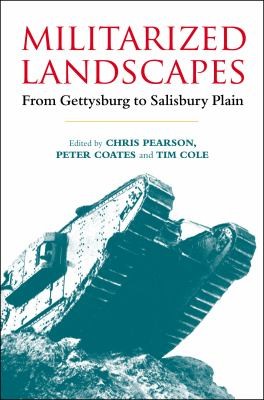
Militarized Landscapes: From Gettysburg to Salisbury Plain
0
0
As an Amazon Associate and affiliate partner, Menrva Books earns from qualifying purchases. Learn more
Author Description
War and the preparation for war generally take place outdoors, in fields, forests, grasslands, deserts, and other environments. Militarization, then, is a process that requires the active deployment and exploitation of various landscape features, including topography, vegetation, and climate... Militarization is a process that occurs through, and leaves its mark on, societies, economies, cultures, and political structures. It also operates through landscape, which it changes or maintains, in both a physical and cultural sense... Taken as a whole, the chapters in this volume capture a sense of the constantly changing meanings and materialities of militarized landscapes and the ways in which sites as diverse as Gettysburg, Salisbury Plain and the Korean DMZ have been created, transformed, narrated and represented. And while these sites may have been accorded predominantly military meanings and objectives, such as the training of soldiers or the pursuit of battle, they cannot be divorced from the wider and overlapping civilian histories and geographies. The role of militarized landscapes as places of environmentalism and heritage, two processes normally conceived of by default as exclusively civilian ventures, indicates the importance of shedding light onto these camouflaged places by digging into their multi-layered histories and geographies--Introduction.
Menrva's Summary
THE THESIS
This book investigates how war and military preparation actively shape and are shaped by the natural environment. It examines the process of militarization as it operates through landscape, altering physical and cultural aspects of sites ranging from Gettysburg to the Korean DMZ. The book argues that these landscapes, while primarily serving military functions like training and battle, are inseparable from their civilian histories and geographies, often encompassing environmental and heritage aspects.
THE SCOPE MAP
- Analysis of how topography, vegetation, and climate are exploited in military contexts.
- Exploration of the physical and cultural transformations of landscapes due to militarization.
- Case studies of diverse sites including Gettysburg, Salisbury Plain, and the Korean DMZ.
- Examination of the interplay between military meanings and civilian histories/geographies.
- Discussion of militarized landscapes as sites of environmentalism and heritage.
- Focus on the multi-layered histories and geographies of these camouflaged places.
THE AUTHORITY PERSPECTIVE
The book's introduction frames its approach as an examination of the 'constantly changing meanings and materialities of militarized landscapes.' It highlights the integration of military sites with civilian histories and geographies, suggesting a nuanced perspective that moves beyond purely military functions. The emphasis on environmental and heritage aspects indicates an interdisciplinary approach, likely appealing to scholars and readers interested in the broader societal and ecological impacts of military activity. The framing suggests a scholarly work that digs into complex, layered histories.
Page Count:
301
Publication Date:
2010-01-01
ISBN-10:
1441117024
ISBN-13:
9781441117021
History
Non-Fiction
Environmental History
Military History
Community Tags
Similar Books