The Theory of Hb Spaces
0
0
As an Amazon Associate and affiliate partner, Menrva Books earns from qualifying purchases. Learn more
Author Description
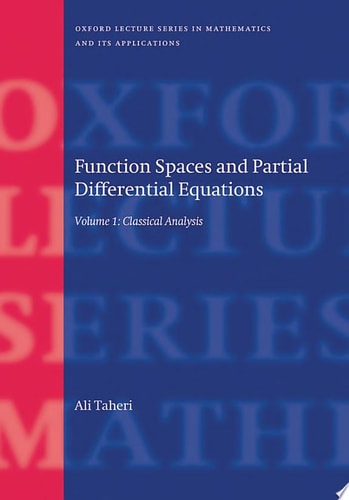
An H(b) space is defined as a collection of analytic functions which are in the image of an operator. The theory of H(b) spaces bridges two classical subjects: complex analysis and operator theory, which makes it both appealing and demanding. The first volume of this comprehensive treatment is devoted to the preliminary subjects required to understand the foundation of H(b) spaces, such as Hardy spaces, Fourier analysis, integral representation theorems, Carleson measures, Toeplitz and Hankel operators, various types of shift operators, and Clark measures. The second volume focuses on the central theory. Both books are accessible to graduate students as well as researchers: each volume contains numerous exercises and hints, and figures are included throughout to illustrate the theory. Together, these two volumes provide everything the reader needs to understand and appreciate this beautiful branch of mathematics
Menrva's Summary
THE THESIS
This book investigates the foundational theory of H(b) spaces, a class of analytic functions defined by their relationship to an operator. The work bridges complex analysis and operator theory, presenting preliminary subjects essential for understanding H(b) spaces. It covers topics such as Hardy spaces, Fourier analysis, integral representations, Carleson measures, and various operators like Toeplitz, Hankel, and shift operators, along with Clark measures. The text is structured to be accessible to graduate students and researchers, incorporating exercises, hints, and illustrative figures.
THE SCOPE MAP
- Hardy spaces and their properties
- Fourier analysis techniques
- Integral representation theorems for analytic functions
- Carleson measures and their significance
- Toeplitz and Hankel operators
- Various types of shift operators
- Clark measures and their applications
THE AUTHORITY PERSPECTIVE
This volume is presented as the first of a comprehensive treatment on H(b) spaces, designed to be accessible to graduate students and researchers. The inclusion of exercises, hints, and figures suggests a pedagogical approach aimed at facilitating understanding of complex analytical and operator-theoretic concepts. The foundational nature of this volume indicates it serves as a crucial stepping stone for those wishing to engage with the central theory presented in the subsequent volume.
Page Count:
0
Publication Date:
2014-01-01
ISBN-10:
1107027772
ISBN-13:
9781107027770
Non-Fiction
Science
Mathematics
Analysis
Operator Theory
Community Tags
Similar Books