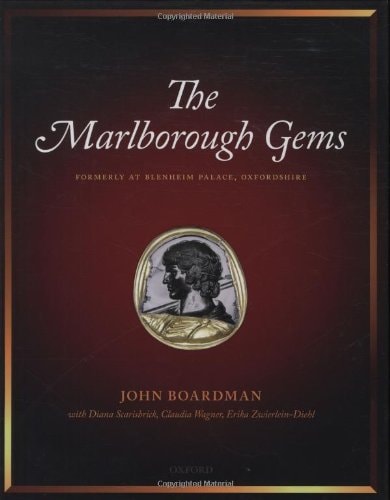
The Marlborough Gems: Formerly at Blenheim Palace, Oxfordshire
0
0
As an Amazon Associate and affiliate partner, Menrva Books earns from qualifying purchases. Learn more
Author Description
The collection of about 800 engraved gems of the Fourth Duke of Marlborough (1739-1817) at Blenheim Palace was the largest and most important of the 18th-century English collections. It comprised a Renaissance collection of the Gonzaga Dukes of Mantua, acquired by Lord Arundel in the mid-17th century; the mid-18th-century collection of Lord Bessborough; and the Duke's own acquisitions in Italy and elsewhere.The collection was finally dispersed at sale in 1899. The present whereabouts of little over one quarter is now known, while the appearance of less than one third is known from autopsy or mainly 18th-century drawings. However, the Beazley Archive in Oxford possesses impressions and electrotype copies of virtually every Marlborough gem as well as the cataloguer's notebooks.illustrative material available, from the Archive, from drawings and from autopsy, study, and photography, of the surviving identified pieces. Each is described and discussed, and, in the accompaying text, the evidence for the Mantua collecting and the sources for the later collections are explored, with emphasis on the way the collection illustrates the history of gem-collecting in England, and the reception there of classical iconography which came to be much copied in the 18th century and later in other media.
Menrva's Summary
THE THESIS
This work investigates the historical significance, provenance, and eventual dispersal of the Marlborough collection of engraved gems, once the most prominent assemblage of its kind in 18th-century England. John Boardman, a renowned scholar of classical art and archaeology, utilizes archival records from the Beazley Archive, historical drawings, and surviving physical specimens to reconstruct the collection's history. The text argues that the Marlborough gems serve as a critical case study for understanding the evolution of gem-collecting practices and the broader reception of classical iconography in British culture.
THE SCOPE MAP
What You Will Find
- A comprehensive catalog of the approximately 800 engraved gems originally held at Blenheim Palace.
- Historical analysis of the collection's origins, including the Gonzaga Dukes of Mantua and Lord Bessborough acquisitions.
- Methodological use of 18th-century drawings, impressions, and electrotype copies to document dispersed items.
- Examination of the influence of classical iconography on 18th-century decorative arts and media.
THE AUTHORITY PERSPECTIVE
Scholars and art historians regard this volume as a foundational reference for the study of glyptic art and the history of private collecting in England. Readers frequently note the meticulous academic rigor and the importance of the Beazley Archive data in providing a definitive record of these otherwise scattered antiquities.
Page Count:
360
Publication Date:
2010-01-11
Publisher:
Oxford University Press
ISBN-10:
0199237514
ISBN-13:
9780199237517
History
Gems
Archaeology
Reference
Antiquities
Art History
Community Tags
Similar Books