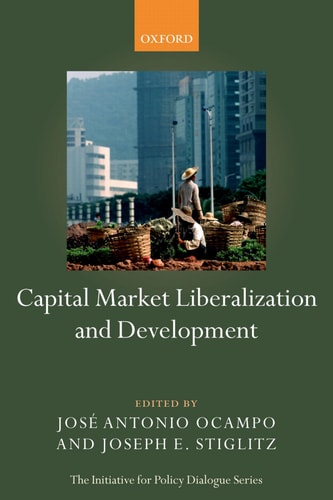
Capital Market Liberalization and Development
0
0
As an Amazon Associate and affiliate partner, Menrva Books earns from qualifying purchases. Learn more
Author Description
Capital market liberalization has been a key battle in the debate on globalization for much of the previous two decades. Many developing countries, often at the behest of international financial institutions such as the IMF, opened their capital accounts and liberalized their domestic financial markets as part of the wave of liberalization that characterized the 1980s and 1990s and in doing so exposed their economies to increased risk and volatility. Now with even the IMF acknowledging the risks inherent in capital market liberalization, the central intellectual battle over the effects of capital market liberalization has for the most part ended. Though this new understanding of the consequences of capital market liberalization is reshaping many policy discussions among academics and international institutions, ideological and vested interests remain.Critical policy debates also remain, such as how much government should intervene and what tools are available. Although capital market liberalization might not produce the promised benefits, many economists and policymakers still worry about the costs of intervention. Do these costs exceed the benefits? What are the best kinds of interventions, under what circumstances? To answer these questions, we have to understand why capital market liberalization has failed to enhance growth, why it has resulted in greater instability, why the poor appear to have borne the greatest burden, and why the advocates of capital market liberalization were so wrong. Bringing together some of the leading researchers and practitioners in the field, this volume provides an analysis of both the risks associated with capital market liberalization and the alternative policy options available to enhance macroeconomic management.
Menrva's Summary
THE THESIS
This volume investigates the economic consequences of capital market liberalization in developing nations and evaluates the efficacy of government intervention strategies. Edited by Jose Antonio Ocampo and Joseph E. Stiglitz, the work synthesizes research from leading economists to challenge the historical consensus promoted by international financial institutions. It argues that the liberalization of capital accounts often introduced systemic instability and failed to deliver promised growth, necessitating a re-evaluation of macroeconomic management tools.
THE SCOPE MAP
What You Will Find
- Analysis of the historical impact of capital account liberalization during the 1980s and 1990s.
- Evaluation of the risks and volatility introduced to developing economies by financial deregulation.
- Examination of alternative policy frameworks for government intervention in financial markets.
- Discussion on the disproportionate impact of market instability on impoverished populations.
THE AUTHORITY PERSPECTIVE
Experts recognize this volume as a critical contribution to the post-Washington Consensus discourse on global finance. Readers frequently note the technical rigor of the analysis, which serves as a foundational text for understanding the limitations of unfettered capital market liberalization.
Page Count:
384
Publication Date:
2008-05-01
Publisher:
Oxford University Press
ISBN-10:
0199238448
ISBN-13:
9780199238446
Economics
Finance
Globalization
Public Policy
Fiscal Policy
Community Tags
Similar Books