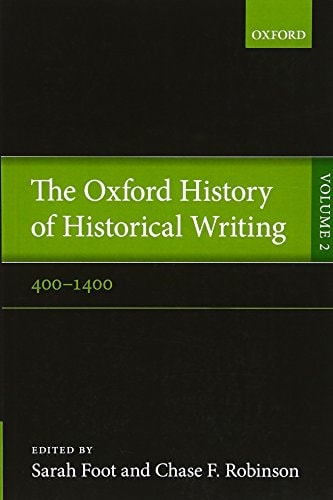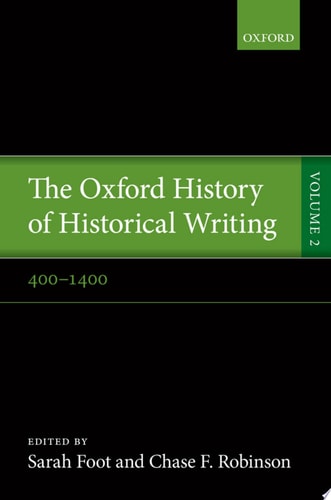
The Oxford History of Historical Writing: Volume 2: 400-1400
0
0
As an Amazon Associate and affiliate partner, Menrva Books earns from qualifying purchases. Learn more
Author Description
How was history written in Europe and Asia between 400-1400? How was the past understood in religious, social and political terms? And in what ways does the diversity of historical writing in this period mask underlying commonalities in narrating the past? The volume, which assembles 28 contributions from leading historians, tackles these and other questions. Part I provides comprehensive overviews of the development of historical writing in societies that range from the Korean Peninsula to north-west Europe, which together highlight regional and cultural distinctiveness. Part II complements the first part by taking a thematic and comparative approach; it includes essays on genre, warfare, and religion (amongst others) which address common concerns of historians working in this liminal period before the globalizing forces of the early modern world.
Menrva's Summary
THE THESIS
This volume investigates how historical consciousness and the practice of recording the past evolved across diverse European and Asian societies between 400 and 1400. Edited by Chase F. Robinson and Sarah Foot, the work compiles 28 essays from prominent historians to analyze the religious, political, and social frameworks that shaped historical narratives. The text argues that while regional traditions remained distinct, underlying commonalities existed in how pre-modern cultures conceptualized and documented their heritage before the onset of early modern globalization.
THE SCOPE MAP
What You Will Find
- Comprehensive regional surveys of historical writing spanning from the Korean Peninsula to north-west Europe.
- Thematic analysis of historiographical genres, including the treatment of warfare and religious doctrine.
- Comparative studies examining the intersection of political power and historical record-keeping.
- Scholarly essays addressing the methodologies used by historians to interpret the medieval period.
THE AUTHORITY PERSPECTIVE
Experts recognize this volume as a foundational reference for understanding the development of global historiography during the Middle Ages. Readers frequently note the academic density of the prose, which serves as a rigorous resource for students and researchers of medieval history.
Page Count:
672
Publication Date:
2012-12-29
Publisher:
Oxford University Press
ISBN-10:
0199236429
ISBN-13:
9780199236428
History
Non-Fiction
Academic
Historiography