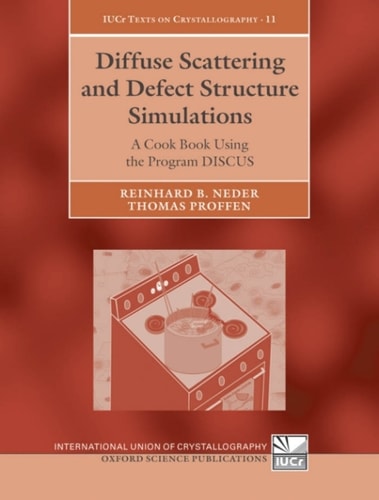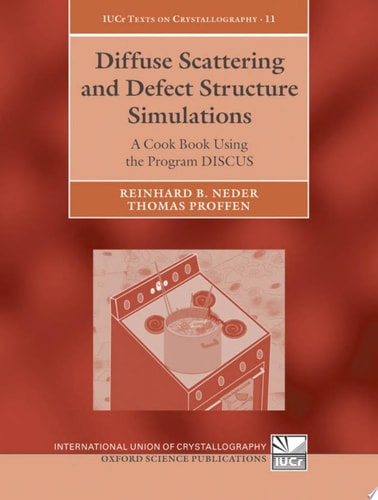
Diffuse Scattering and Defect Structure Simulations: A Cook Book Using the Program DISCUS
0
0
As an Amazon Associate and affiliate partner, Menrva Books earns from qualifying purchases. Learn more
Author Description
In recent years, it has become apparent that knowing the average atomic structure of materials is insufficient to understand their properties. Diffuse scattering in addition to the Bragg scattering holds the key to learning about defects in materials, the topic of many recent books. What has been missing is a detailed step-by-step guide on how to simulate disordered materials. The DISCUS cook book fills this need covering simple topics such as building a computer crystal to complex topics such as domain structures, stacking faults or using advanced refinement techniques to adjust parameters on a disordered model. The book contains a CD-ROM with all files needed to recreate every example given using the program DISCUS. The reader is free to follow the principles behind simulating disordered materials or to get down into the details and run or modify the given examples.
Menrva's Summary
THE THESIS
This book addresses the methodological gap in materials science by providing a comprehensive, practical guide for simulating disordered atomic structures using the DISCUS software program. Reinhard B. Neder and Thomas Proffen, both established experts in crystallography and computational modeling, utilize their extensive experience to bridge the gap between theoretical diffuse scattering and practical computer simulation. The text serves as a technical framework for researchers who need to move beyond average structure analysis to understand the impact of defects on material properties. By providing a structured approach to building and refining disordered models, the authors enable scientists to interpret complex scattering data with greater precision.
THE SCOPE MAP
What You Will Find
- Step-by-step tutorials for building computer-based crystal models.
- Advanced techniques for simulating domain structures and stacking faults.
- Practical refinement methodologies for adjusting parameters on disordered models.
- A complete set of digital files for recreating all provided simulation examples.
THE AUTHORITY PERSPECTIVE
Experts in the field of crystallography recognize this text as the definitive manual for users of the DISCUS program. Readers frequently note the technical density of the prose, which is intended for researchers already familiar with the fundamentals of diffraction and scattering theory.
Page Count:
240
Publication Date:
2009-01-13
Publisher:
Oxford University Press
ISBN-10:
0199233691
ISBN-13:
9780199233694
Science
Materials Science
Chemistry
Physics