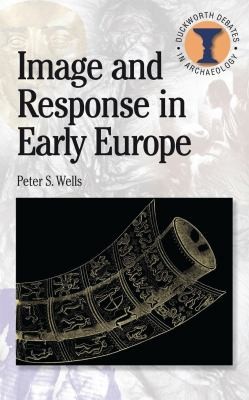
Image and Response in Early Europe
0
0
As an Amazon Associate and affiliate partner, Menrva Books earns from qualifying purchases. Learn more
Author Description
"Did people in the Iron Age see their bronze figurines and sculpted stones differently from the way we see them today? How can we approach the problem of determining how they saw things? How different was their experience viewing these objects in the course of their use, from ours as we look at them in museum cases or through photographs in books?" Recent research in cognitive neuroscience and cognitive psychology forms the theoretical basis for a new approach to understanding the visual basis of communication in early Europe. The focus is on societies from the Early Iron Age to the early medieval period in temperate Europe, at the time that traditions of writing were gradually being adopted in this part of the world. Following review of the most relevant results of new experiments and observations in those sciences, Peter S. Wells examines the visual aspects of the archaeological evidence to investigate the role that visuality - the visual quality of things - played in the expression of the self, in interaction between members of social groups, in ritual activity, and in the creation and experience of cultural landscapes."--Jacket.
Menrva's Summary
THE THESIS
This book investigates how Iron Age Europeans perceived visual artifacts, challenging modern assumptions about their experience of art. It explores the theoretical basis for understanding visual communication in early Europe, drawing on cognitive neuroscience and psychology to analyze how people from the Early Iron Age to the early medieval period experienced objects. The work examines the role of visuality in self-expression, social interaction, ritual, and the creation of cultural landscapes during a time of evolving literacy.
THE SCOPE MAP
- An examination of visual perception in Iron Age and early medieval temperate Europe.
- Application of recent research from cognitive neuroscience and cognitive psychology.
- Analysis of the visual aspects of archaeological evidence, including bronze figurines and sculpted stones.
- Discussion of the role of visuality in the expression of self and social interaction.
- Exploration of visuality in ritual activity and the creation of cultural landscapes.
- Focus on societies during the gradual adoption of writing traditions.
THE AUTHORITY PERSPECTIVE
The book is positioned within the 'Duckworth Debates in Archaeology' series, suggesting a scholarly and analytical approach to its subject matter. The premise, which applies modern cognitive science to ancient visual perception, indicates a work likely to engage with theoretical discussions within archaeology and art history. It appears to offer a novel framework for interpreting archaeological finds by considering the viewer's experience, potentially appealing to specialists in European prehistory and visual culture studies.
Page Count:
168
Publication Date:
2008-01-01
ISBN-10:
0715636820
ISBN-13:
9780715636824
History
Art
Non-Fiction
Visual Culture
Archaeology
Iron Age
Art History
Community Tags
Similar Books