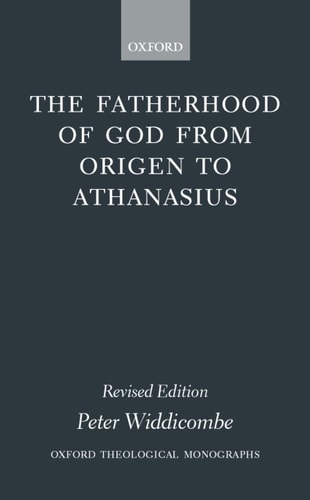
The Fatherhood of God from Origen to Athanasius
0
0
As an Amazon Associate and affiliate partner, Menrva Books earns from qualifying purchases. Learn more
Author Description
The fatherhood of God has had a central, if increasingly controversial, place in Christian thinking about God. Yet although Christians referred to God as Father from the earliest days of the faith, it was not until Athanasius in the fourth century that the idea of God as Father became a topic of sustained analysis. Looking at the genesis of Athanasius' understanding of divine fatherhood against the background of Alexandrian tradition, Widdicombe demonstrates how the concept came to occupy such a prominent place in Christian theology.
Menrva's Summary
THE THESIS
This work investigates the historical development and theological evolution of the concept of divine fatherhood within early Christian thought, specifically tracing its trajectory from Origen to Athanasius. Peter Widdicombe, a scholar of patristic theology, examines how the designation of God as Father transitioned from a liturgical and scriptural habit into a rigorous subject of systematic analysis. By situating Athanasius within the broader Alexandrian tradition, the author argues that the fourth-century shift toward a sustained understanding of divine fatherhood was a critical development in the formation of orthodox Christian doctrine. The text utilizes primary source analysis to map the conceptual shifts that occurred during this formative era of church history.
THE SCOPE MAP
What You Will Find
- A detailed examination of the Alexandrian theological tradition and its influence on early church doctrine.
- A comparative analysis of the writings of Origen and Athanasius regarding the nature of God.
- Historical context regarding the transition of divine fatherhood from a devotional term to a formal theological topic.
- Scholarly investigation into the fourth-century debates that shaped the understanding of the Trinity and divine relations.
THE AUTHORITY PERSPECTIVE
Scholars and theologians recognize this monograph as a rigorous contribution to the study of patristic thought and the history of doctrine. Readers frequently note the academic density of the prose, which serves as a foundational text for those specializing in the development of early Christian theology.
Page Count:
316
Publication Date:
2001-01-18
Publisher:
Oxford University Press
ISBN-10:
0199242488
ISBN-13:
9780199242481
Religion
History
God_fatherhood
Academic
Christian Theology
Patristics
Community Tags
Other Editions(3)

Similar Books